

Ecumenism
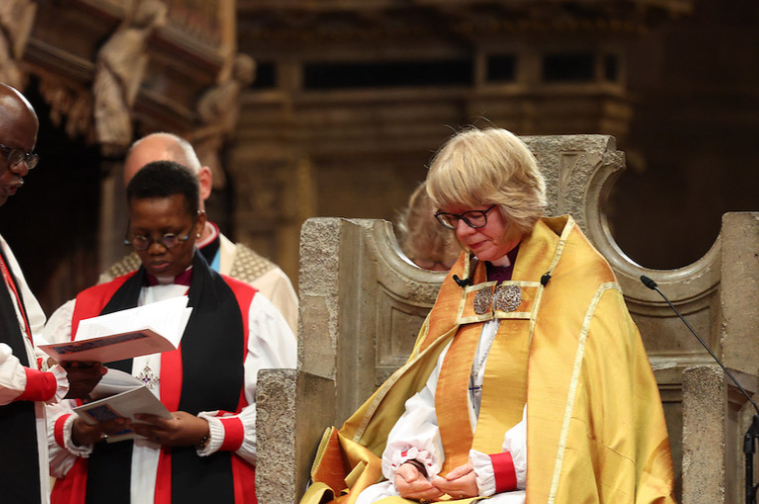
Pope Leo prays with Anglican leader Sarah Mullally at Vatican audience
Pope Leo has received Anglican leader Sarah Mullally at the Apostolic Palace, where the two prayed together and renewed calls for Christian unity despite continuing doctrinal divisions between the Catholic Church and the Anglican Communion Pope Leo received the head of the Anglican Communion, Sarah Mullally, in an audience on Monday at the Apostolic Palace, where the two prayed together in the Urban VIII Chapel during the Easter season. Welcoming the head of the Anglican Communion and her delegation, the Pope recalled the meeting between Pope Paul VI and Michael Ramsey sixty years ago, describing it as a moment that continues to shape relations between the two communions. His Holiness noted that the Archbishops of Canterbury and the Bishops of Rome have continued to meet and pray together since that encounter, adding: “I am pleased that today we continue this tradition.” The Pope also referred to the work of the Anglican Centre in Rome, established in the same period, and greeted its director, Bishop Anthony Ball, who represents the Archbishop of Canterbury to the Holy See. Speaking during Eastertide, Pope Leo repeated the greeting of the risen Christ, saying: “Peace be with you.” He told those present that this greeting “invites us not only to accept the Lord’s gift of peace, but also to be messengers of his peace,” adding: “I have often said that the peace of the risen Lord is ‘unarmed’. This is because he has always responded to violence and aggression unarmed, inviting us to do the same.” The Pope said that divisions between Christians affect their witness, stating: “While our suffering world is in deep need of Christ’s peace, divisions among Christians weaken our ability to be effective bearers of that peace.” His Holiness continued: “If we want the world to take our preaching to heart, therefore, we must be constant in our prayers and in our efforts to remove any stumbling blocks that hinder the proclamation of the Gospel.” Referring to the theological dialogue established following the 1966 meeting between Paul VI and Ramsey, the Pope recalled that both sides had committed themselves to seeking “the restoration of full communion in faith and sacramental life”. His Holiness said: “Certainly, this ecumenical journey has been complex. While much progress has been made on historically divisive issues, new problems have arisen in recent decades, making the path to full communion more difficult to discern.” The Pope added that the Anglican Communion is currently facing similar questions, saying: “I know that the Anglican Communion is also grappling with many of the same issues at present.” He added: “We must not allow these constant challenges to prevent us from seising every opportunity we can to proclaim Christ together to the world.” The Pope cited remarks made by Pope Francis to Anglican leaders in 2024, quoting: “It would be a scandal if, because of divisions, we failed to fulfil our common vocation to make Christ known.” His Holiness added: “For my part, I would add that it would also be a scandal if we did not continue to work to overcome our differences, however insurmountable they may seem.” Concluding the audience, Pope Leo thanked Mullally for her visit and said: “As we continue to walk together in friendship and dialogue, let us pray that the Holy Spirit … will guide our steps as, in prayer and humility, we seek that unity which is God’s will for all his disciples.” He added: “God bless you and your family.” The audience granted by Pope Leo to the head of the Anglican Communion, Sarah Mullally, is a tableau in contemporary ecumenical relations of courteous language, shared prayer and an appeal to unity set against unresolved doctrinal divisions. However, what it shows is the enduring byproduct of post-conciliar ecumenical practice and the Catholic Church’s dogmatic teaching on Holy Orders, authority and the nature of unity itself. While the meeting illustrates the continuation of a diplomatic and theological framework established in the wake of the Second Vatican Council, one which seeks visible fraternity with other Christian communities, it stops short of resolving the fundamental questions that divide them. It is a pattern that has endured for decades and which remains largely unchanged under the present pontificate. The language employed by Pope Leo, emphasising “unarmed” peace, shared witness and perseverance despite difficulty, fits squarely within what he has inherited. The optimism since 1966 for Anglicans was always constrained by the judgement articulated in Apostolicae Curae (1896), in which Pope Leo XIII declared Anglican orders “absolutely null and utterly void”. That teaching has never been rescinded, and it remains a decisive factor in any assessment of such encounters. Thus, the main question is what these meetings are intended to achieve. If full sacramental unity is not presently attainable, and if the doctrinal obstacles are, in some respects, widening rather than narrowing, then the purpose of continued high-level engagement requires clarification. Pope Leo’s own remarks acknowledged that “new problems have arisen in recent decades, making the path to full communion more difficult to discern”. This is a measured formulation; it points to developments within the Anglican Communion, above all the ordination of women and disputes over marriage and moral teaching, which have complicated, and in the eyes of some rendered obsolete, the earlier trajectory of dialogue. The Pope nevertheless insisted that such challenges should not prevent common witness. “We must not allow these constant challenges to prevent us from seising every opportunity we can to proclaim Christ together to the world,” he said. Yet it is precisely here that unease is expressed, as the use of the Urban VIII Chapel for joint prayer, while consistent with contemporary practice, would once have been approached with far greater caution, lest it give rise to confusion about the nature of ecclesial unity. Earlier magisterial teaching, notably that of Pope Pius XI in Mortalium Animos (1928), warned against forms of “pan-Christian” activity that might obscure the claim of the Catholic Church to be the one true Church. There is a risk that gestures intended as signs of fraternity may be interpreted as implying a unity that does not in fact exist. There are also more practical implications. The existence of the Personal Ordinariates, established to receive former Anglicans into full communion while preserving elements of their patrimony, rests on the premise that unity ultimately requires incorporation into the Catholic Church. Encounters such as this do not alter that structure, but they do raise questions about how it is to be understood within a broader ecumenical strategy that prioritises ongoing relationship over definitive resolution.
Apr. 28, 2026