

Channel 4
Channel 4 drama Falling turns celibacy into a hollow spectacle
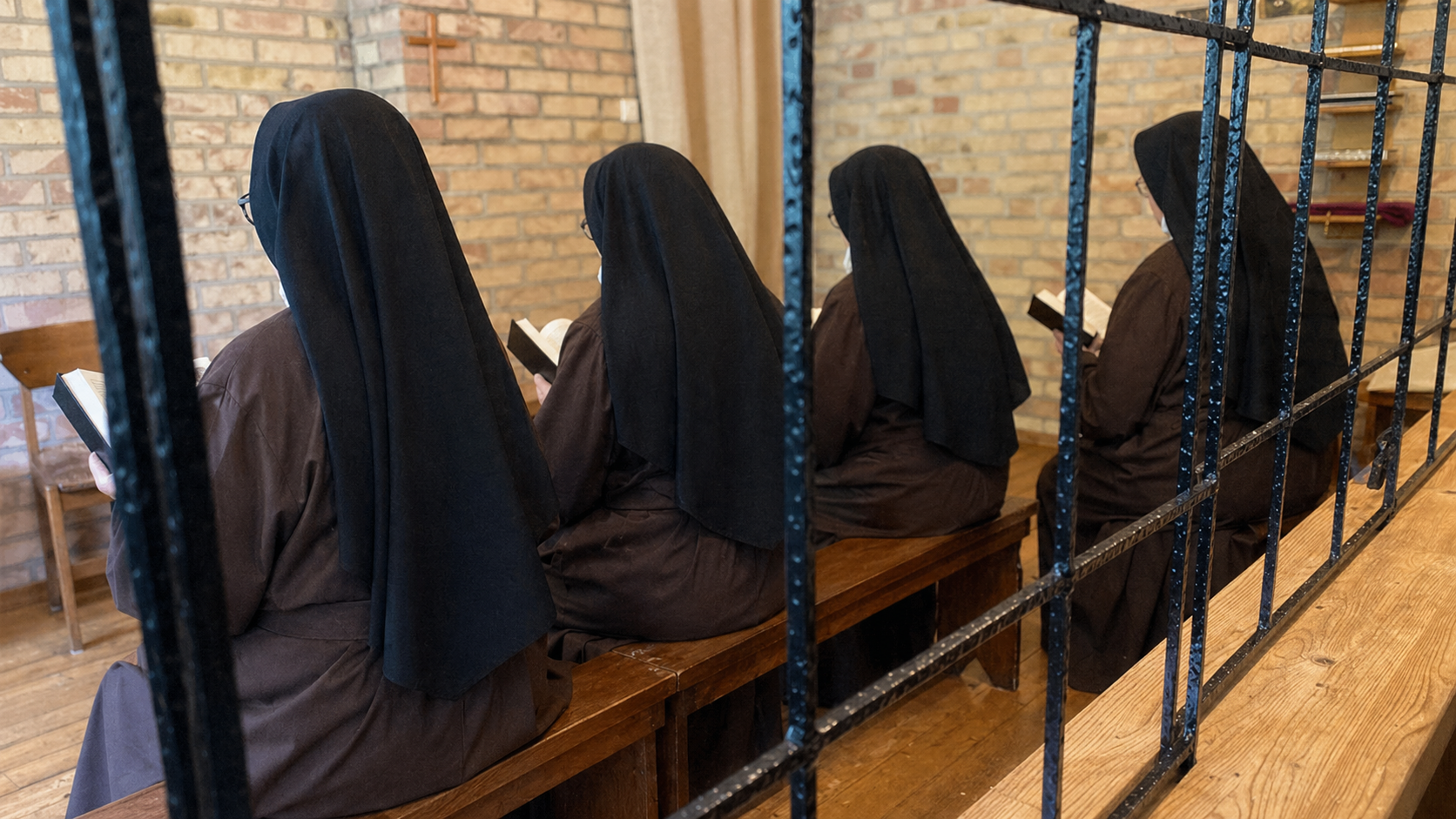
A new Channel 4 drama will depict a nun and a priest in a romantic relationship, placing Catholic vows at the centre of a storyline that treats celibacy as something to be tested and overcome A new Channel 4 drama centred on a romantic relationship between a nun and a Catholic priest has been announced. Falling , a six-part series written by Jack Thorne, will depict the story of a nun in religious life who develops feelings for a priest, whose response to her advances becomes a central tension of the narrative. The programme forms part of a wider slate of new productions commissioned by Channel 4, alongside Pierre , a separate drama by Roy Williams starring David Harewood. The broadcaster first confirmed the project in February 2025, with production beginning two months later. The series is being produced by The Forge Entertainment, a subsidiary of Banijay UK, whose previous credits include National Treasure and The Buccaneers . Casting details announced in April 2025 confirmed Keeley Hawes in the role of Anna, described as a “devoted nun”, and Paapa Essiedu as David, a Catholic priest. The supporting cast includes Rakie Ayola, Jason Watkins, Niamh Cusack, Adrian Scarborough, David Dawson, Susan Brown and Sandra Voe, alongside newcomers Holly Rhys and Shayde Sinclair. According to production material released by Channel 4, the series will follow two individuals “deeply committed to their work in the Church and in their community”, whose relationship develops in unexpected ways. “Neither is expected to fall in love. But when they do, both are forced to wrestle with what it means for them, their vows and their relationship with God,” the synopsis states, describing the programme as a “contemporary romantic drama”. The involvement of Thorne, a BAFTA award-winning writer whose previous work includes Adolescence and Help , has been highlighted by the broadcaster as a significant element of the project. Speaking at the time of the announcement, he said: “I never thought I’d write a love story, but I am very excited to be making one with the brilliant Peter Hoar.” Hawes, who will play the central role of Anna, said: “I’m thrilled to be taking on the role of Anna and so looking forward to working alongside the brilliant Paapa Essiedu to bring Jack Thorne’s beautiful scripts to life.” Essiedu added: “Falling is a story that has Jack Thorne’s singular talent of mining the sublime out of the ordinary running all the way through.” The series is directed by Peter Hoar, whose recent work includes It’s A Sin and episodes of The Last of Us . Executive producers include George Faber and George Ormond, with Joe Donaldson serving as producer. The drama has been commissioned by Ollie Madden, Director of Film4 and Channel 4 Drama, and Gwawr Lloyd. Lloyd said: “The combination of Keeley Hawes and Paapa Essiedu, alongside Jack Thorne’s incredible scripts and Peter Hoar’s direction, means this will be the most extraordinary show. We are so excited to bring this unique and compelling love story to Channel 4.” While Falling is presented as a fictional drama, its premise touches directly on Catholic teaching concerning celibacy and religious vows. Both priests and women in consecrated life in the Latin Church undertake commitments that preclude marriage, a discipline that has long been regarded as integral to their vocation. The announcement of Falling is a deliberate attempt to treat the Roman Catholic Church and the Latin tradition of sacred celibacy as material for dramatic transgression. The premise is framed as a “contemporary romantic drama” in which vows are placed under emotional strain. This is a sign of well-established, society-wide anti-Catholic sentiment and, in particular, a challenge to consecrated life, not as a sign of spiritual transcendence, but as a psychological tendency waiting to be resolved through desire and lust. This becomes more explicit as the nun in Falling is not presented first as a bride of Christ, but as a woman defined by an inner conflict that must culminate in romantic expression. The priest, likewise, is drawn into a narrative in which celibacy appears as an obstacle rather than a vocation. This is a product of a wider cultural movement in which the sacred is frequently recast as repression and denial. Since the upheavals of the Enlightenment, Catholic institutions have often been treated in British culture as relics of a restrictive order. In earlier centuries, anti-Catholicism was overt and political; in the modern era, it has become more aesthetic and psychological, making it more accessible to the average person. The confessional, the cloister and the priesthood are no longer attacked directly, but reinterpreted as symbols of conflict against the “secular” West. The shift is subtle but significant, as it allows Western secular culture to maintain a posture of tolerance while continuing to single out Catholicism as uniquely available for ridicule. Moreover, such narratives are rarely extended to other religious traditions. There is an instinctive hesitation to depict a rabbi or an imam in similar terms. It is an unspoken hierarchy of sensitivities, in which Catholicism is perceived as both safe and familiar enough to be handled without restraint. It is often Catholics who are singled out for ridicule. Furthermore, this recalls how the secular celebration of Halloween in the West has increasingly included costumes that trade on religious imagery in ways many Catholics find irreverent, particularly the recurring trope of the sexualised nun. What might once have been regarded as harmless fancy dress now reflects a cultural tendency to strip sacred symbols of their meaning and repurpose them for amusement or provocation. This is a sign, in the modern West, of how easily the sacred can be trivialised when its underlying meaning is no longer grasped. This was perhaps most apparent in the recent controversy surrounding the radio station Studio Brussel. Earlier this year, presenters Eva De Roo and Dries Lenaerts apologised for a sketch in which Catholic statues, including those of Christ and the Virgin Mary, were smashed as part of a comedic segment. Interviewed by Colm Flynn of EWTN News, the presenters explained their actions, saying: “I think it might offend people, but I think in Belgium not really, we are not a very religious country… I would have been more careful in another country, but in Belgium it is not a big issue.” Flynn then asked the presenters whether they would smash an image of Muhammad, which prompted a much more sober reaction. “That is a very dangerous question,” one said, while another added: “No, no, that would be inappropriate.” They also unanimously agreed they would not do the same to a Jewish symbol. The implication was clear: Catholic symbols were perceived as uniquely permissible targets within this hierarchy of “sensitivities”. Falling , it seems, is another example of modern writers struggling to imagine religious commitment except as a prelude to its own violation. Religious life cannot be appreciated for its intrinsic beauty, but must rather be desecrated to earn viewers’ apparent interest. The irony is that, whilst a quickly fading generation of writers attempts to entice its audience through sacrilege, there is a growing interest in traditional expressions of religious life, with a generation exhausted by media cycles and instant communication finding refuge in contemplation and the rhythm of prayer. Indeed, last summer was branded online as “Convent Summer”, with an explosion of interest in going on retreat. Similarly, there has been a worldwide surge in people going on pilgrimage, with the number of people walking the Camino de Santiago de Compostela increasing almost tenfold since 2000. This thirst for authentic religious life makes the richness of vocation being reduced to a single preoccupation of the writer even sadder. However, as a results-driven economy makes apparent its shallowness, and viewers’ preference for the Church’s truths becomes known, we might expect less Falling -style degradation and more of what has shaped Christian culture for hundreds of years: the adventure of religious life.
Apr. 28, 2026