

Cardinal Raymond Burke
Pope Leo XIV’s first year and the future of the Traditional Mass
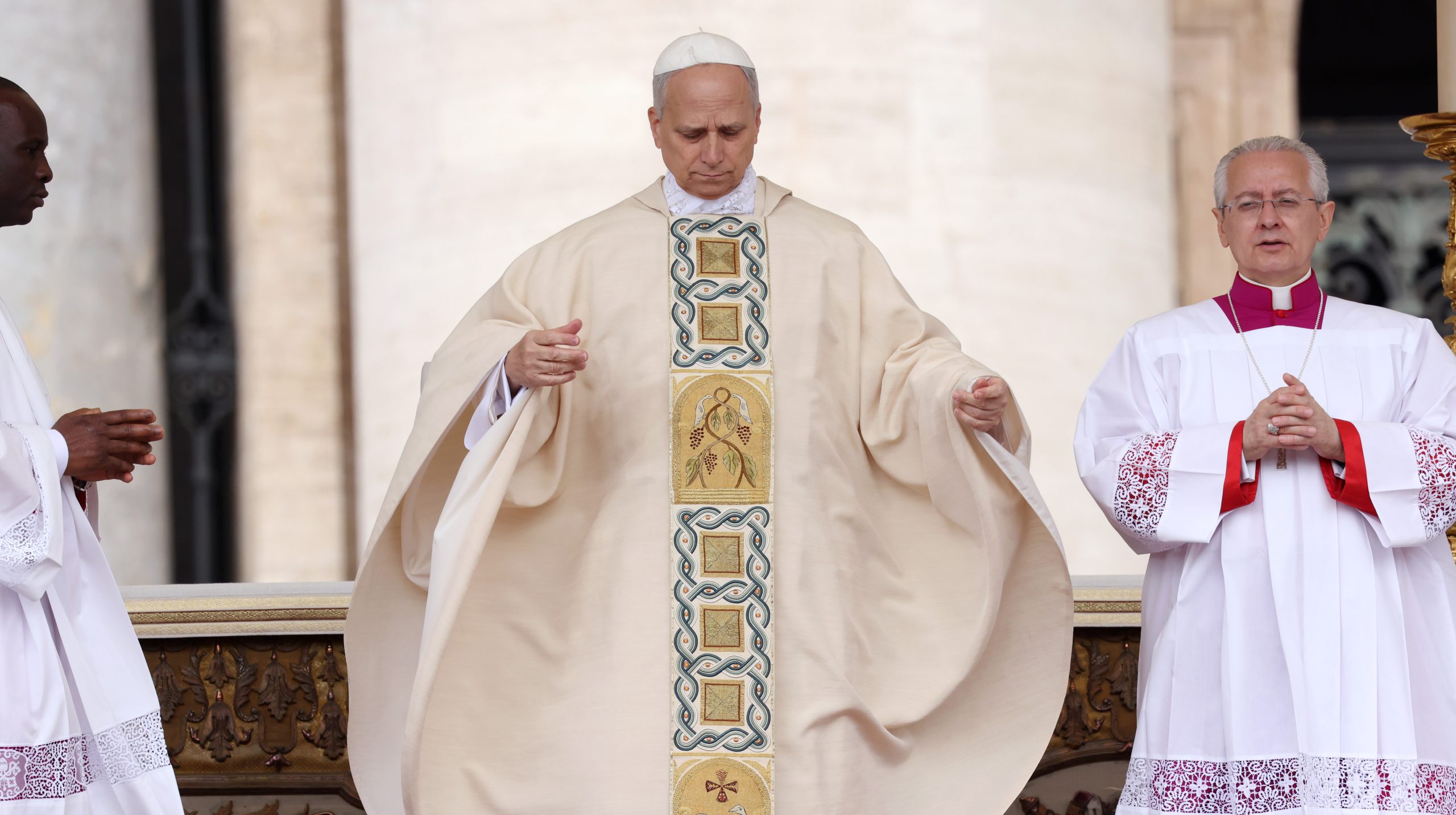
Dr Joseph Shaw, philosopher and chairman of the Latin Mass Society, examines Pope Leo XIV’s approach to the Traditional Mass, Traditionis Custodes and the question of the SSPX a year after the Pope’s election. The first question for the Catholic press about a new pope is inevitably where he sits on the ideological spectrum: will he support readers’ causes and punish their opponents? Popes are complicated figures, however, and do not arrive neatly labelled. The first indication of the Holy Father’s ideological allegiance came before his election, when the journalist Jaime Gurpegui encountered Austin Ivereigh and Fr James Martin SJ in a street in Rome. It was a moment when Cardinal Prevost’s handling of a clerical abuse case in his former diocese in Peru was being discussed in the media, and Ivereigh was upset about this. The encounter suggested that two of the best-known supporters of Pope Francis regarded Prevost as “their man”. His election a few days later was indeed welcomed by many who had been looking for a “continuity candidate” to continue the work of Pope Francis. What we have been told about the conclave suggests a more complicated story, however. The progressives’ candidate was Cardinal Pietro Parolin, the Secretary of State; conservative cardinals had backed the Hungarian Cardinal Péter Erdő. The story appears to be that the conservative bloc of votes went to Prevost, as a compromise candidate, after the initial ballots, before Parolin’s supporters accepted the inevitable. There are many possible explanations for why Fr Martin’s favoured candidate did not immediately secure the support of the largest bloc of more liberal cardinals, and we will never know all the factors involved. Now he is Pope, we can more usefully judge him by his actions. The very first thing we saw of the newly elected Pope Leo when he appeared on the balcony and greeted the people was that he was wearing the traditional red papal mozzetta, a garment worn by all the modern popes except Pope Francis. Indeed, Leo wears it frequently on formal occasions, for example when first meeting the President of Italy. To read this as a rebuke to Francis might be too strong, but it adjusts the dial of formality, a dial that every pope can turn as he sees fit. In the same spirit, he has restored the throne used at public Masses by Pope Benedict and rejected by Pope Francis. Pope Leo has also undone a series of decisions made by Pope Francis. The issues involved are not headline-grabbing: a reorganisation of the Diocese of Rome; the rent charged to cardinals and others in housing owned by the Vatican; the role of the Vatican Bank in regulating financial matters; and a commission to promote fundraising. If there is a political angle to these, it may have more to do with personalities than deep theological principles. Nevertheless, it reminds us that what one pope does, another can undo: a reality demonstrated by Pope Francis himself when he overturned the legal framework established by his predecessor, Pope Benedict XVI, for the Vetus Ordo. One rumour that circulated around Pope Leo when he was first elected was that he himself had celebrated the Traditional Mass. No witness to these celebrations was willing to be identified, however, and the rumour now appears to be untrue. What he has done, on the subject of the Traditional Mass, is give permission for its celebration by Cardinal Raymond Burke in St Peter’s in October 2025, as the centrepiece of the annual traditionalist Ad Petri Sedem pilgrimage. It is unclear whether he will grant permission again this year. He may have been displeased by the triumphalist tone of some of the media coverage of last year’s Mass, which was attended by an overflowing congregation. Nevertheless, he has continued his series of private audiences with supporters and representatives of the Vetus Ordo, including Cardinal Raymond Burke, the most powerful and consistent supporter of the ancient liturgy in the Curia; Bishop Athanasius Schneider of Kazakhstan, its best-known episcopal supporter; Fr John Berg, the Superior General of the traditionalist Fraternity of St Peter; and Prof Stephen Bullivant, a sociologist of religion whose most recent research, soon to be published, concerns Catholics attached to the Traditional Mass in the United States. Unsurprisingly, Pope Leo has also seen many people from other parts of the spectrum of opinion, including the ubiquitous James Martin SJ, but he has not found time to see Fr Davide Pagliarani, Superior General of the traditionalist but canonically irregular Society of St Pius X. No one could begrudge Pope Leo speaking to people on all sides of the argument in order to inform himself, but excluding Fr Pagliarani is not easy to understand. The SSPX is planning to carry out the consecration of new bishops without the permission of the Holy See, an act that would incur automatic excommunication for those most directly involved and, it is widely argued, would trigger a formal schism. These consecrations are scheduled for July 1 and inevitably form a backdrop to everything else connected with the traditional liturgy. The founder of the SSPX, the French Archbishop Marcel Lefebvre, carried out such consecrations in 1988. This led to the excommunication of the consecrators and those consecrated, but was also the occasion for Pope St John Paul II to approve new priestly institutes dedicated to the Traditional Mass which distanced themselves from Lefebvre. Pope St John Paul II was at pains to distinguish the question of the liturgy from the question of obedience, writing in his Apostolic Letter Ecclesia Dei that traditional Catholics had a “rightful aspiration” to the ancient Mass, an aspiration that should be met in the context of healthy liturgical pluralism. Pope Francis appeared to merge the two issues in 2021, in his own Apostolic Letter Traditionis Custodes and the accompanying letter, when he suggested that the Vetus Ordo and liturgical pluralism were intrinsically problematic. The closest we have yet come to a fresh statement of policy from Pope Leo is his message to the bishops of France, conveyed to a meeting of their Episcopal Conference in a letter from Cardinal Parolin. This asked them to look for “practical solutions” to the question, with a view to “the generous inclusion of persons sincerely attached to the Vetus Ordo”. The irony of this letter is that what is stopping bishops finding practical solutions is papal legislation – Traditionis Custodes – which prevents them from setting up personal parishes, recognising new “groups” of the faithful attached to the Traditional Mass, allowing recently ordained priests to celebrate the Vetus Ordo publicly, and fostering long-standing celebrations in parishes without permission from the Dicastery for Divine Worship: a permission that has not always been forthcoming. There are many ways in which Traditionis Custodes could be neutralised, not all of which require a humiliating public renunciation of Pope Francis’s thinking. One indication of a change in the way the law is being applied was given when Britain’s papal nuncio told the bishops of England and Wales that permissions would be granted for the celebration of the Traditional Mass in parish churches. This would be enough to relieve many local frustrations and conflicts, but it would not be enough to rebuild trust with the SSPX. If Pope Leo wants to begin doing that, something more public and dramatic will be required. Now that a full year has passed since his election, we may see some bolder moves from the Holy Father, such as changes of personnel: for example, the Prefect of the Dicastery for Divine Worship, Cardinal Arthur Roche, has so far been kept in post despite being past retirement age. On the SSPX, it would be surprising if any pope watched a group move into schism with indifference: we will see whether Pope Leo finds his inner John Paul II.
May 8, 2026