

Cardinal Mario Grech
Vatican synod reports propose new model for choosing bishops
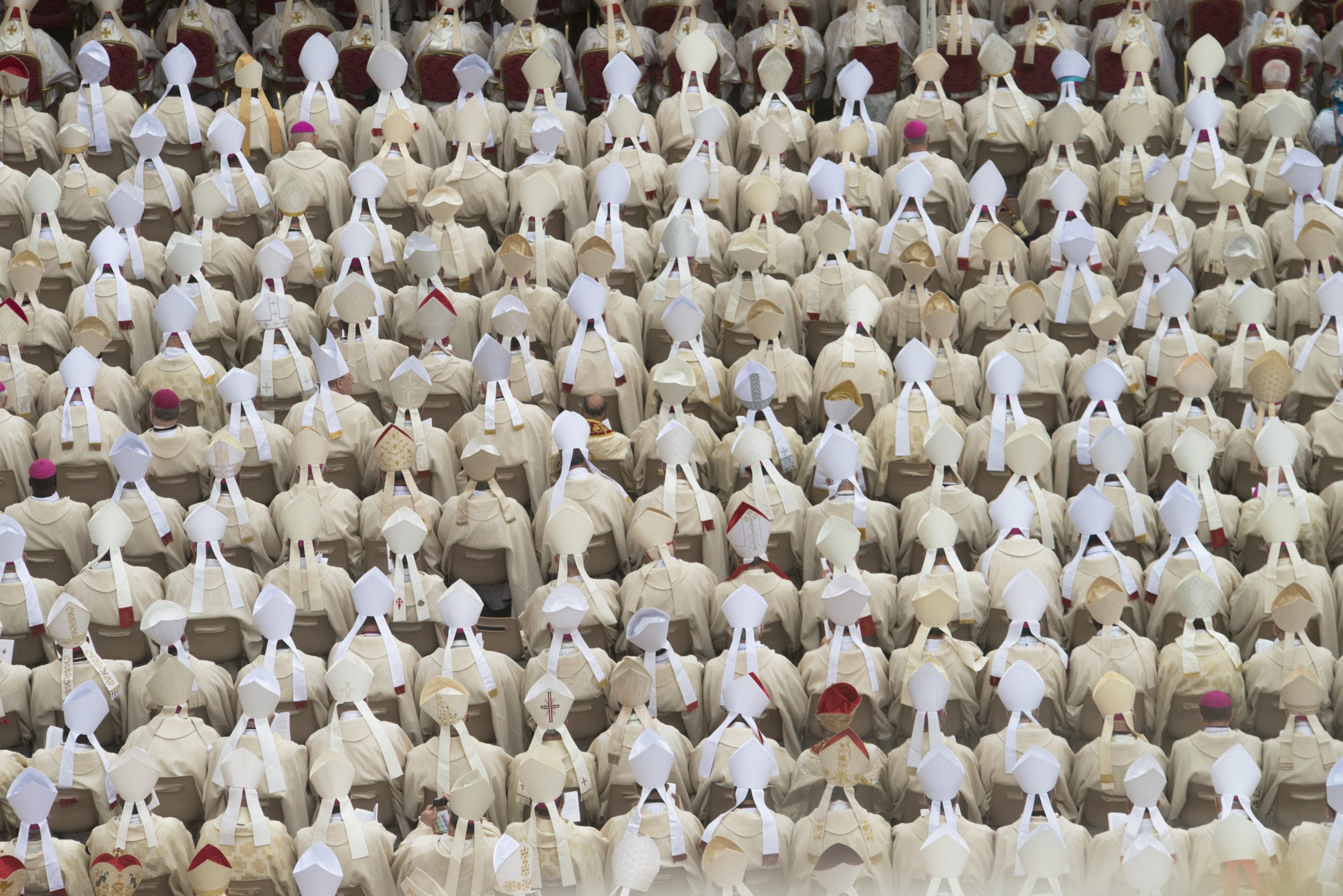
New Vatican synod reports set out proposals to widen consultation in the selection of bishops and introduce new methods for addressing doctrinal questions The Vatican has released new synodal reports outlining proposed criteria for the selection of bishops and new methods for addressing doctrinal and pastoral questions. The texts, published by the General Secretariat of the Synod of Bishops and overseen by Cardinal Mario Grech, include the first part of the final report of Study Group No. 7 on some aspects of the person and ministry of the bishop (in particular: criteria for selecting candidates to the episcopacy, the judicial function of bishops, the nature and structure of ad limina Apostolorum visits) from a missionary synodal perspective, together with the final report of Study Group No. 9 on theological criteria and synodal methodologies for shared discernment of emerging doctrinal, pastoral and ethical issues. Introducing the documents, Cardinal Grech said: “Discernment lies at the heart of selecting a bishop,” a motif in line with the wider synodal emphasis on listening and participation. The report on bishops states that “there is no shepherd without a flock, and no flock without a shepherd”. It sets out a number of qualities expected of candidates, including the ability to “build communion”, “engage in dialogue”, and demonstrate “deep knowledge of local cultures”. It also calls for apostolic nuncios to adopt “a synodal and missionary profile”, adding that they should be capable of recognising those same characteristics in potential candidates for the episcopate. A more structured consultation process is proposed for dioceses approaching an episcopal succession. The report states: “As an episcopal succession approaches, the bishop is to convene the presbyteral council and the diocesan pastoral council, whose members express, in a collegial manner, an opinion on the needs of the diocese and submit to the bishop – in a sealed envelope – the names of priests they consider suitable for the episcopate.” It adds: “Where possible, consultation is also to include the cathedral chapter, the finance council, the lay council, and representatives of consecrated persons, young people and the poor.” The document further recommends that consultation should involve “an equivalent number of consecrated men and women, laymen and laywomen” in order “to bring out the truth as fully as possible”. Provision is also made for the ongoing formation of clergy, with the suggestion that dedicated teams be established to assist bishops. In cases of a vacant see, the report proposes the creation of diocesan committees that may be consulted by the apostolic nuncio “to clarify the state of the diocese, the profile of the new shepherd, and possible candidates”. Alongside these measures, the report calls on the dicasteries of the Roman Curia to review their procedures “in a more synodal direction” and suggests the introduction of periodic independent evaluations of the selection process. The companion report on theological discernment proposes what it describes as a “change of paradigm” in addressing difficult questions facing the Church. Drawing on the witness of the early Church in the Acts of the Apostles, it highlights the importance of unity amid cultural diversity. It states that the term “emerging” should be preferred to “controversial” when referring to such questions, explaining that “the aim is not merely to resolve problems but to build the common good through relational conversion, shared learning and transparency”. The document introduces what it calls the “principle of pastorality”, adding that “there can be no proclamation of the Gospel without taking responsibility for the interlocutor, in whom the Spirit is already at work”. It sets out three methodological steps: “listening to ourselves, listening to reality, and convening different forms of knowledge”, and reiterates that “conversation in the Spirit remains the privileged tool for developing an ecclesial culture of synodality”. The report also indicates areas where these methods are to be applied, including the experience of Catholics with homosexual tendencies and questions relating to active nonviolence. It emphasises the importance of testimony, stating that lived experience should serve as “the starting point for paths of ethical and theological discernment”. The publication of the synodal reports of Study Groups No. 7 and No. 9 represents a structural reconfiguration within the Church, as both documents shift the centre of gravity from a hierarchical model towards one governed by process, consultation and “discernment”. This begins in the framing of Study Group No. 7. Under “Purpose and Scope” (p. 3, §a–b, e–g), the report states: “The Assembly calls for a review of the criteria for selecting candidates for the episcopate, balancing the authority of the apostolic nuncio with participation of episcopal conferences. There are also requests to expand consultation with the faithful People of God…” It continues: “The relevant canons of the Code of Canon Law … must be adapted in accordance with the synodal spirit of the following proposals.” The subordination of canon law to a “synodal spirit” reverses the traditional order, and while it does not explicitly say so, it places the Church’s law within a contemporary process. The shift becomes more pronounced in the section on discernment within the local Church (pp. 5–6, §c–g). The report states: “The bishop must convene the presbyteral council and the diocesan pastoral council … each of these bodies will collegially formulate a written opinion … [and] submit … the names of priests … suitable for the episcopate.” It adds: “Where circumstances allow, the cathedral chapter, the diocesan finance council, the lay council, the unions of consecrated men and women, and diocesan groups that institutionally represent youth and the poor should also be convened.” This is not consultation in the traditional sense, but formalises a structured, representative process of nomination. The inclusion of “groups that institutionally represent youth and the poor” introduces categories that are sociological rather than ecclesial and are not rooted in God. Historically, while acclamation by clergy and people existed, it was precisely curtailed to avoid factionalism and politicisation. The same dynamic appears in the section on a vacant see (pp. 6–7, §b–d): “A Committee for the Provision of the Local Church is established … composed of two diocesan priests … two consecrated men or women and two laypersons … The nuncio relies on this committee … to receive opinions on possible candidates.” In effect, this creates a standing local body that mediates between Rome and the diocese in the nomination of a bishop. The proposed model, even if not formally altering doctrine, introduces a practical expectation of local participation that approximates a nomination process. The development continues in the criteria for bishop candidates themselves (p. 4, §b–c): “It is necessary to consider … his ‘synodal competencies’ … openness to complexity, a disposition towards innovation, the ability to adapt to new situations.” These criteria stand alongside, and risk displacing, the traditional requirements set out in canon 378: sound doctrine, good morals, piety and prudence. The emphasis shifts from what a bishop is to how he operates within a process. If Study Group No. 7 alters governance, Study Group No. 9 addresses doctrine more directly. In its introductory framework (pp. 3–6), the report states that the synodal process “calls for a conversion of heart and mind as well as a transformation of practices” and explicitly prioritises method: “priority to ‘how?’ … favouring ‘the account of the lived experience of the People of God, read and interpreted ecclesially in the light of Revelation’ rather than ‘abstract theoretical assumptions’.” This is a decisive methodological claim. It shifts the starting point of theological reflection from revealed truth, as authoritatively taught, to experience interpreted within a communal process. The report makes this explicit in its call for “a paradigm shift” and a “shared commitment to a historical, experiential, and practical hermeneutics that is genuinely human” (p. 8 ff.). The tension becomes acute in the application of this method. In the section on “emerging issues” (p. 23 ff.), the report selects the experience of persons with same-sex attraction as a test case. The annexed testimonies are not incidental illustrations; they are the material for discernment. Annex A1 (Portugal) states: “The real sin was not my love, but my lack of trust in His desire for my fulfilled life.” It describes a same-sex partner as a “husband” and rejects approaches centred on chastity. Annex A2 (USA) is more explicit: “My sexuality isn’t a perversion, disorder, or cross; it’s a gift from God… If I could choose to be gay, I would.” The difficulty lies in how the report uses these testimonies. They are presented as voices to be “listened to” within a process of discernment that seeks “possible pathways”. The underlying pattern across both documents is therefore the same: the Church hierarchy is reframed as facilitation. While not alien to Catholic life, this is a sign a rebalancing that places pressure on the Church’s traditional understanding of herself. Photo credit: Jeffrey Bruno from New York City, United States – Canonization 2014- The Canonization of Saint John XXIII and Saint John Paul II, CC BY-SA 2.0, https://commons.wikimedia.org/w/index.php?curid=32427716
May 6, 2026
Vatican sets out next phase of Synod on Synodality
The Vatican has confirmed the next stage of the Synod on Synodality, with a series of international meetings planned through to 2028 The Vatican has outlined the next stage of the Synod on Synodality, confirming that a series of international meetings will take place over the coming two years. In a statement issued on April 17, the General Secretariat of the Synod said it had convened the XVI Ordinary Council in an online session chaired by Cardinal Mario Grech. The meeting opened “with a moment of prayer led by Sr Nathalie Becquart”, before turning to what the Secretariat described as “the current phase of implementation of the Final Document of the XVI Assembly”. It forms part of what it describes as the “implementation phase” of the 2024 assembly. The statement said that the Secretary General “opened the session with several communications concerning the current phase of implementation of the Final Document of the XVI Assembly, the work of the Study Groups, whose final reports are in the process of being published, and the forthcoming organisation of two meetings”. Among the key developments is the convocation of a preparatory gathering at the Vatican from June 23 to 25. According to the Secretariat, this meeting will serve to prepare the continental evaluation assemblies scheduled for the first months of 2028. Those invited include “one representative of the Patriarchs of the Council of the Patriarchs of the Eastern Churches, the Presidents of the International Meetings of Episcopal Conferences, as well as the Presidents of the Episcopal Conferences of the United States and Canada, each accompanied by the Coordinator of the Synodal Team of the respective body”. The statement added: “The Holy Father Leo XIV will take part in a specific working session.” The June meeting forms part of a wider timetable which will see the synodal process continue through to 2028, when continental assemblies will assess the reception and application of the Synod’s conclusions. A global assembly in Rome is expected to follow later that year. The Secretariat also confirmed that a further document to guide this phase is in preparation. During the April 17 session, Fr Giacomo Costa presented “a proposal for a document for the implementation phase of the Synod, particularly concerning the organisation of the evaluation assemblies”. The Council, it said, “discussed the document at length and approved its general structure”. It added that the final version, intended as a complement to the “Pathways for the Implementation Phase” published in June 2025, “will be revised by the Ordinary Council and published by the beginning of summer”. In a separate development, the Vatican provided new details of a meeting of bishops’ conference presidents to be held in Rome from October 7 to 14, focusing on Amoris laetitia. The gathering had previously been announced by Pope Leo XIV in a message marking the tenth anniversary of the document’s publication. According to the Secretariat, the October meeting “will be organised by the Dicastery for the Laity, the Family and Life”, with the General Secretariat of the Synod providing “organisational and methodological support”. It stressed that “this is not a synodal assembly, but a consultative meeting of the Holy Father with the Presidents of the Episcopal Conferences and of the Synods of the Eastern Catholic Churches sui iuris”. In his March 19 message, Pope Leo XIV said the purpose of the gathering would be “to proceed, in mutual listening, to a synodal discernment on the steps to be taken in order to proclaim the Gospel to families today […] and taking into account what is currently being done in the local Churches”. The April 17 statement concluded with a note of thanks to Bishop Luis Marín de San Martín for his service to the Secretariat, stating that members had asked Cardinal Grech “to convey to H.E. Msgr Luis Marín de San Martín their gratitude for his years of service”, and assuring him of their prayers following his appointment as Almoner of His Holiness and Prefect of the Dicastery for the Service of Charity. The Vatican’s latest moves on the Synod on Synodality indicate that the process has been established as a continuing feature of Church governance and, under Pope Leo XIV, it is acquiring a firmer institutional shape. What is now emerging is a phase of consolidation, with the Holy See proceeding in a measured manner. There has been no pause or quiet shelving of a process associated with Pope Francis. On the contrary, it is moving forward with precision, as the promised roadmap, due in early summer, will formalise a multi-year implementation phase running through to 2028. This continuity indicates that synodality is now treated as a structural principle. The Synod of Bishops, established by Pope Paul VI in 1965, was conceived as a consultative body assisting the Roman Pontiff. What has since developed is an expansion of its process, including a prolonged phase of reception and evaluation. The personal involvement of Pope Leo XIV is also notable, as the Secretariat has confirmed that he will take part in a specific working session during the June meeting. Popes do not routinely participate in mid-level preparatory gatherings, which suggests a direct interest in shaping the outcome. The explicit inclusion of the presidents of the United States and Canadian episcopal conferences, named alongside their synodal coordinators, is also notable. Other regions are referenced more generally through continental bodies such as CELAM, CCEE and SECAM. This level of specificity suggests continued attention to the reception of synodality in the English-speaking world, particularly in North America. During the 2023–2024 assemblies, several bishops from the United States were among those who raised concerns about doctrinal clarity and safeguards. The forthcoming June meeting can therefore be understood as part of an effort to ensure alignment ahead of the evaluation stage beginning in 2028. A similar approach is evident in the handling of the October meeting on Amoris laetitia. The Vatican has made clear that this will not be a synodal assembly but a consultative meeting organised by the Dicastery for the Laity, the Family and Life, with support from the Synod Secretariat. A decade after its publication, the document’s treatment of the divorced and remarried remains contested. Holding the meeting outside the formal synodal framework appears intended to manage the tone of the discussion. This dual approach, advancing synodality while containing its more contentious applications, indicates that Pope Leo XIV is maintaining the trajectory set by Pope Francis while seeking to give it a more stable institutional form.
Apr. 23, 2026