

Argentine Archbishop H Ctor Ag Er
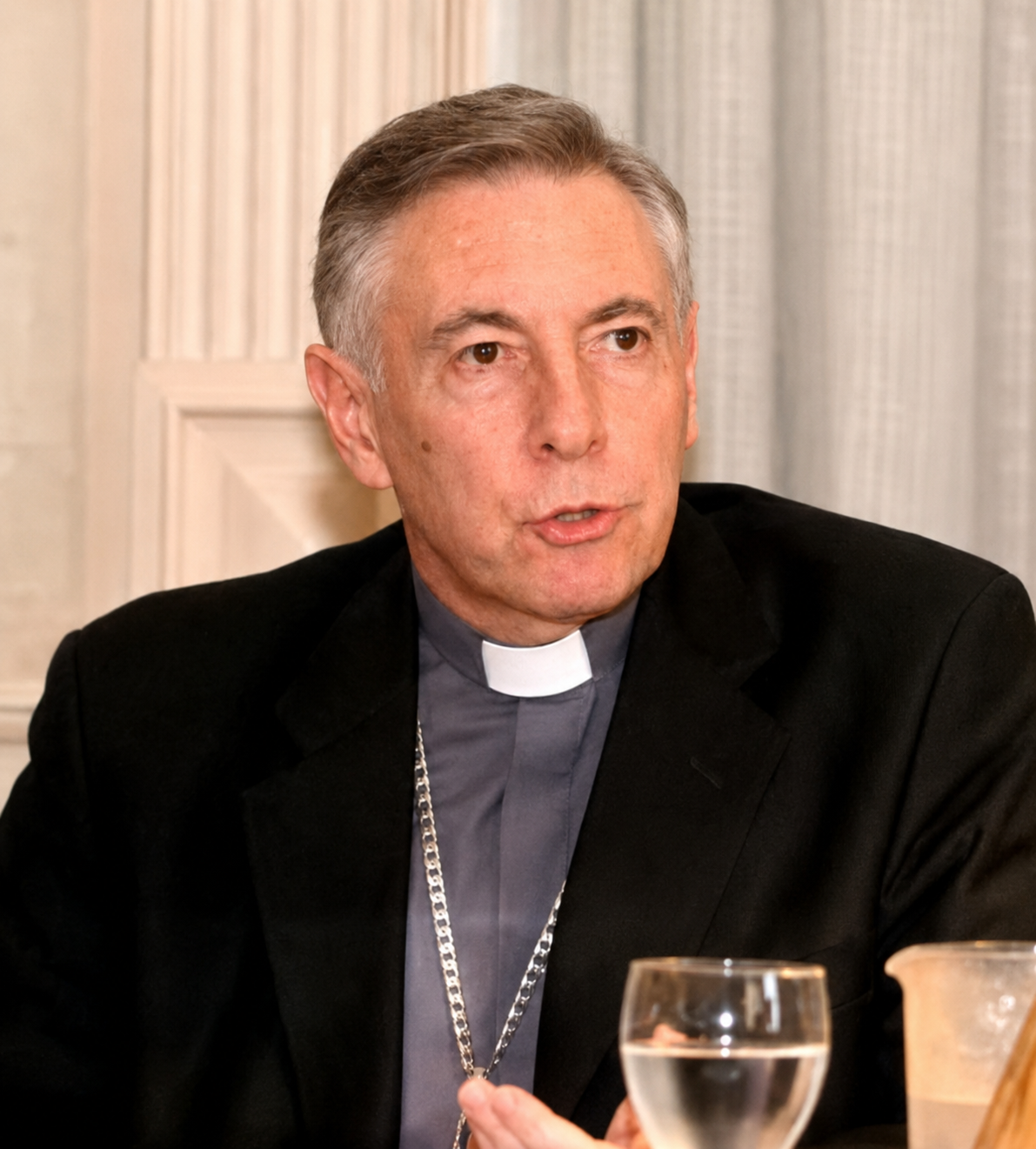
Archbishop Agüer praises Chartres pilgrimage and revives Bugnini Freemason allegations
Retired Argentine Archbishop Héctor Agüer has praised the growing popularity of the Paris-Chartres pilgrimage among young Catholics. In the same essay, he renewed longstanding allegations that Archbishop Annibale Bugnini, a central figure in the post-Vatican II liturgical reforms, was a Freemason Retired Argentine Archbishop Héctor Agüer has praised the growing popularity of the Traditional Latin Mass among young Catholics. The former Archbishop of La Plata said the revival of traditional pilgrimages and devotional practices demonstrates that “orthodoxy and Tradition are in good health and are a guarantee for the future”. The comments were made in an essay published on 1 June by Rorate Caeli, in which he reflected on the Traditional Latin Mass, the liturgical reforms introduced after the Second Vatican Council and the renewed interest in traditional Catholic worship, particularly among younger generations. “The media and, especially, social networks point out that in several European countries, particularly among young people, the ‘Traditional Mass’ is being lived with fervour, accompanied by numerous processions and pilgrimages. “The youthful crowds that revived the traditional Paris-Chartres pilgrimage have drawn widespread attention, with an average age of 22. It is a recovery of Catholic tradition, which had been suffocated in those countries by liberalism, progressivism and atheism,” Archbishop Agüer wrote. The archbishop emeritus pointed to several traditional pilgrimages that have attracted growing numbers of participants in recent years, including the annual Paris-Chartres pilgrimage in France, the Oviedo-Covadonga pilgrimage in Spain, the Rome-Subiaco pilgrimage in Italy and the Rawson-Luján pilgrimage in Argentina. “Pilgrimages like Paris-Chartres, and those of Rawson-Luján (Argentina), Oviedo-Covadonga (Spain), Rome-Subiaco (Italy), and others that are emerging here and there, speak to us of something undeniable: orthodoxy and Tradition are in good health and are a guarantee for the future.” Archbishop Agüer said the traditional liturgy remained closely connected to the Church’s historic understanding of the Mass as the sacramental representation of Christ’s sacrifice on Calvary. “The ‘Traditional Mass’ can be called that because it dates back to the seventh and eighth centuries and remained in effect for centuries until at least the Council of Trent, which revised and reissued it so that it would reach our days. Essential to it is its identification with the Sacrifice of the Cross, established as the Sacrament of the Sacrifice at the Last Supper of Jesus with His Apostles. “This Sacrament is the mystery of the Passion and Resurrection, consecrated by the Holy Spirit. The Mass is directed to the glory of the Triune God, to whom it offers the Sacrifice of Jesus,” the retired archbishop wrote. Archbishop Agüer contrasted the older liturgy with the Mass promulgated by Pope Paul VI following the Second Vatican Council, saying: “The Mass defined Catholicism from the Council of Trent to Vatican II. During the pontificate of Paul VI (Giovanni Battista Montini), who succeeded the brief pontificate of John XXIII, a new Mass was invented.” However, he added: “A few modifications here and there could have been introduced to the ‘Traditional Mass’, as had been done during its multi-century existence. But no; Vatican II sought to retouch everything, and a new Mass was meant to spring from its spirit.” Archbishop Agüer also repeated claims concerning Archbishop Annibale Bugnini, the principal architect of the post-conciliar liturgical reforms. “The author of the new Mass was Archbishop Annibale Bugnini, recognised as a Freemason according to undeniable documents, though secret in accordance with the nature of Freemasonry,” he wrote. Archbishop Bugnini, who served as secretary of the Consilium responsible for implementing the Constitution on the Sacred Liturgy, played a central role in the reform of the Roman Rite after the council. Allegations that he was a Freemason have circulated for decades. The former Archbishop of La Plata also highlighted several differences between the traditional liturgy and the reformed rite, including celebration facing the people, the expanded cycle of Scripture readings and the introduction of additional Eucharistic Prayers. “In it, the priest stands facing the people; biblical readings are multiplied, and over time several Eucharistic Prayers were authorised, which recreate the single Canon of the ‘Traditional Mass’.” The archbishop added: “It would seem that in the Mass of Paul VI and Bugnini, the priest offering the rite must strive to direct himself to God and ensure that the faithful do not become confused.” The archbishop emeritus noted that he celebrates the post-conciliar liturgy and was ordained according to the liturgical books that preceded the reforms. He said: “This Mass is the one I celebrate, in which I was ordained nearly 54 years ago; I do so with the greatest devotion I can. But I remember that in my childhood, as an altar boy, I regularly attended the ‘Traditional Mass’, a rite that was never invalidated and has accompanied that of Paul VI until today, and which, as I said at the beginning, is being rediscovered with enthusiasm by youth.” Turning to liturgical abuses, Archbishop Agüer wrote: “Note should be taken, for example, of a certain bishop who entered Mass on a skateboard, or some priests who dress up as clowns when celebrating. Such outrages can only trigger a stampede effect.” Ordained a priest for the Archdiocese of Buenos Aires in November 1972 by Cardinal Juan Carlos Aramburu, Archbishop Agüer served in parish ministry and theological education before being appointed auxiliary bishop of Buenos Aires by Pope John Paul II in 1992. He later became coadjutor bishop of La Plata and succeeded Archbishop Carlos Galán as archbishop in 2000, leading one of Argentina’s most important dioceses until his retirement in 2018. During his episcopal ministry, he became known a prominent conservative voice in the Argentine Church, frequently speaking on liturgical matters, Catholic education, abortion, marriage and secularisation. He also served on several Vatican bodies, including the Pontifical Council for Justice and Peace and the Pontifical Council for Culture, and was a consultant to the Pontifical Commission for Latin America.
Jun. 3, 2026