

Argentina
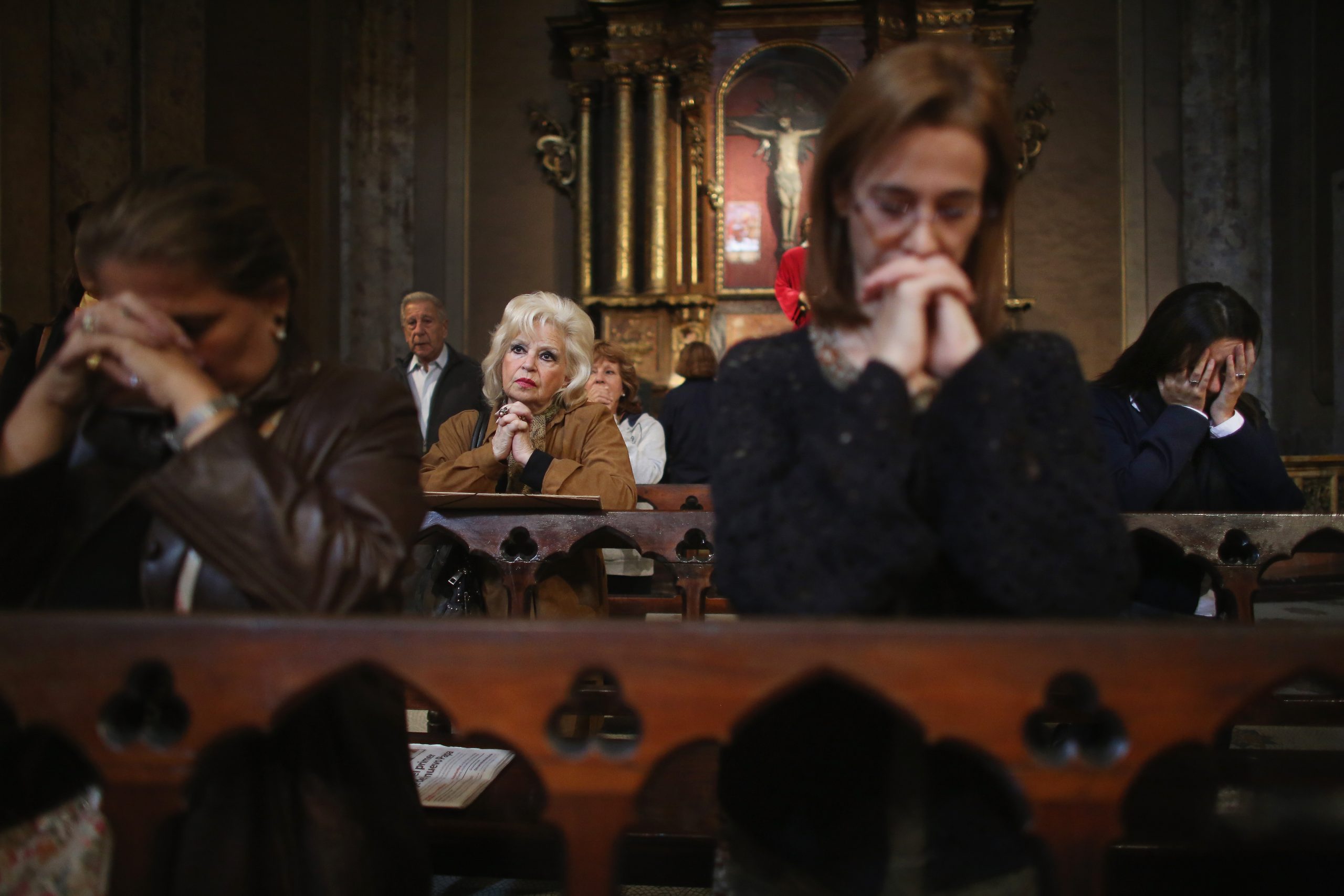
Argentina’s bishops warn middle class is turning to Church charities in economic crisis
Argentina’s Catholic bishops have warned that worsening economic conditions are driving growing numbers of middle-class families to seek help from Church charities Argentina’s Catholic bishops have warned of a deepening social crisis as increasing numbers of middle-class families turn to Church charities for food and assistance amid worsening economic conditions. Archbishop Marcelo Daniel Colombo, president of the Argentine Episcopal Conference, said Church agencies were seeing a sharp rise in demand from people who, until recently, had not required support. “There are people from the lower middle class who are coming to ask for help from Caritas,” Archbishop Colombo told Futurock radio. “Many who are poor today were helping us at Caritas a few months or years ago. We are also very distressed by the increase in the number of middle and lower-class people coming to ask for help.” The archbishop also warned of rising homelessness across the country. “The number of people experiencing homelessness is very alarming,” he said. Argentina is currently in a period of economic instability, with inflation, unemployment and cuts to public spending putting growing pressure on households. Catholic charities and diocesan agencies have reported increased demand at parish soup kitchens and food distribution centres in recent months. Archbishop Colombo defended the principle of social justice and stressed the responsibility of the state to support the vulnerable. “Social justice is the dimension of support provided by the state to those who are vulnerable,” he said. “No one should be left out of social life when they lack the necessities to live.” The archbishop also rejected suggestions that the Church was acting as a political opposition to President Javier Milei’s government. “I think that sometimes some sectors of the leadership believe that the Church is a political opposition, and the truth is that we are not,” he said. “We try to offer our perspective where our poorest people are invisible.” The bishops’ conference has already intervened publicly over concerns surrounding funding for disability care. In April, the conference sent a letter to Argentina’s health minister, Mario Lugones, warning that Church-run institutions caring for disabled people were facing severe financial strain because of delayed and insufficient state payments. “Many of them are in an extremely serious economic crisis, due to the delay and insufficiency of state contributions, which has generated deficits that compromise essential aspects of care, such as food, medicines and the payment of salaries of those who dedicate their lives to the care of people with disabilities,” the bishops wrote. Concerns over deteriorating social conditions were echoed this week during a meeting between Church representatives and several Peronist mayors from Greater Buenos Aires. Among those attending were Jorge Ferraresi of Avellaneda, Mariel Fernández of Moreno, Andrés Watson of Florencio Varela, Ariel Sujarchuk of Escobar, Fernando Espinosa of La Matanza and Pablo Descalzo of Ituzaingó, alongside Gabriel Katopodis, infrastructure minister for the Province of Buenos Aires. Following the meeting, Ferraresi said participants had shared “the harsh assessment of the situation in our neighbourhoods and the need for all sectors to join forces to bring work and food to the homes of every Argentine family”. Archbishop Colombo later confirmed that the bishops were considering further dialogue initiatives in response to the crisis. Born in Buenos Aires in 1961, Archbishop Colombo studied canon law at the Pontifical University of St Thomas Aquinas after his ordination to the priesthood in 1988 for the Diocese of Quilmes. He later served as rector of the diocesan seminary and held several legal and pastoral roles before being appointed Bishop of Orán by Pope Benedict XVI in 2009. In 2013, Pope Francis transferred him to the Diocese of La Rioja before appointing him Archbishop of Mendoza in 2018. He became president of the Argentine bishops’ conference in November 2024 after previously serving as vice-president and second vice-president of the body. There is a historical precedent in Argentina for interventions from the Catholic hierarchy. When the country gained independence at the beginning of the 19th century, the Church was deeply embedded in the formation of the Argentine state. Juan Manuel de Rosas, the longtime governor of Buenos Aires who dominated Argentine politics between 1829 and 1852, enjoyed the support of the Church, with the exception of the Jesuit order, whom he expelled from the country. Many bishops also supported the rise of Juan Domingo Perón in the 1940s, though relations soured in the 1950s as Perón pursued anti-Catholic policies. The military dictatorship of the 1970s and 1980s was a particularly contentious time for the Church, with clerics at times unsure where to lend their support. This was perhaps most famously seen in the kidnapping of Jesuit priests Orlando Yorio and Franz Jalics, who, it has been claimed, were abducted after Jorge Bergoglio, later Pope Francis and then provincial superior of the Jesuits, withdrew protection from the priests. In the country’s more than 40 years of democracy, the Church has continued to make itself heard, opposing the secularisation introduced by President Raúl Alfonsín in the 1980s and leading the charge to defend the rights of the unborn during subsequent presidencies. Archbishop Colombo’s opposition therefore follows a well-trodden pattern, though it is noticeable that he is deliberately avoiding direct “political opposition” and instead focusing on the plight of the poor.
May 14, 2026
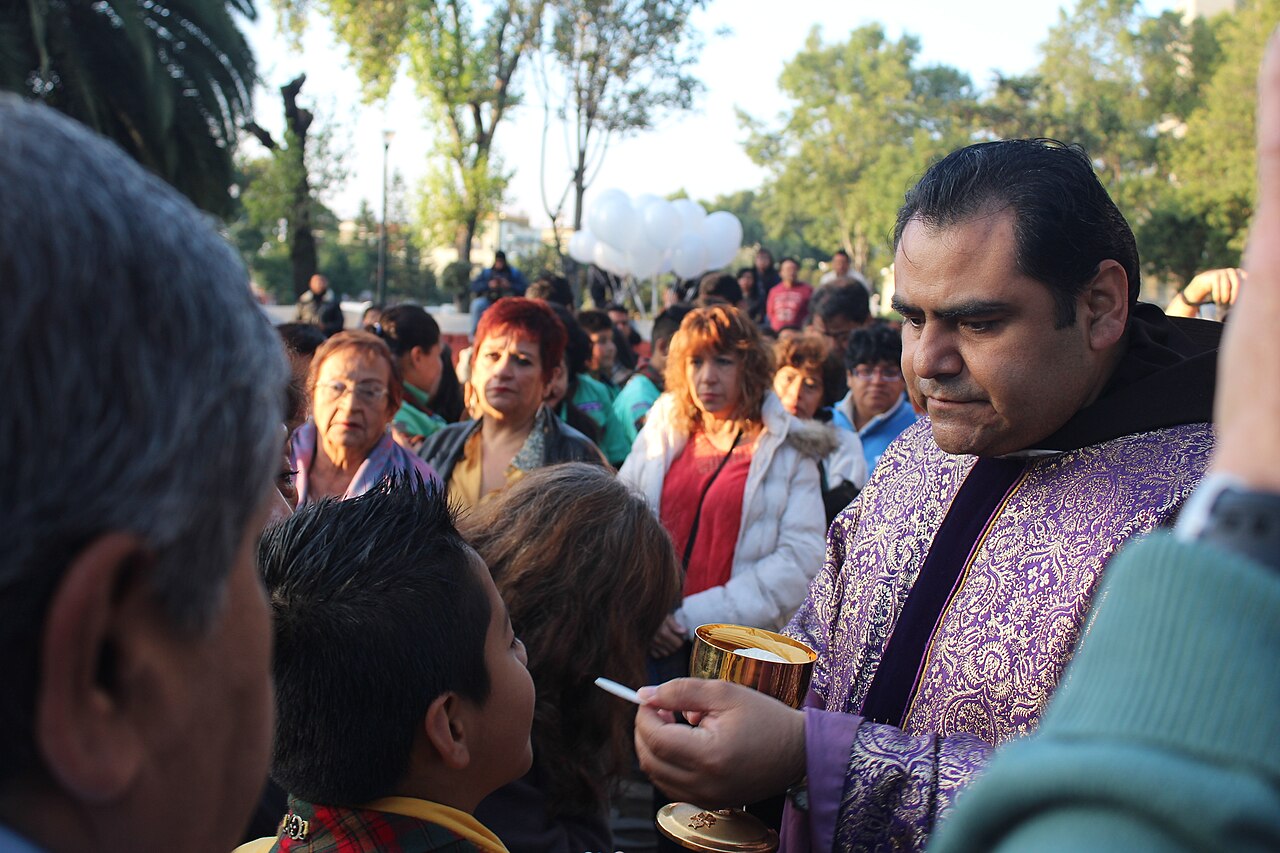
Vatican reported rebuke of Argentine bishops and the limits of bishops’ conferences
The Vatican has reportedly intervened after two Argentine bishops introduced measures discouraging Catholics from receiving Holy Communion kneeling and on the tongue. The intervention raises the question: why have dioceses and bishops’ conferences established “norms” discouraging practices which remain fully licit under universal Church law? The Dicastery for Divine Worship and the Discipline of the Sacraments has reportedly intervened with two Argentine bishops after restrictions were imposed on Catholics wishing to receive Holy Communion kneeling and on the tongue. According to the Argentine Catholic outlet El Wanderer , officials from the dicastery held discussions with Archbishop Marcelo Colombo of Mendoza, president of the Argentine Bishops’ Conference, and Bishop Gabriel Barba of San Luis over measures introduced in their dioceses concerning the manner in which the Eucharist may be received. The report said Vatican officials reminded both bishops that “the faithful have the freedom to receive Communion according to the methods established by the Church, and this freedom cannot be restricted”. The intervention follows months of controversy in Argentina after Archbishop Colombo and Bishop Barba both introduced policies widely interpreted as discouraging or effectively prohibiting traditional modes of reception. In September last year, Archbishop Colombo stated publicly that “in Argentina, Communion is received standing”, referring to norms approved by the Argentine bishops which designate standing as the ordinary posture for the reception of Holy Communion. The norms also provide for a bow before receiving the sacrament. The controversy intensified after an incident at the Basilica of San Francisco in Mendoza in September 2025, when worshippers attempting to receive Communion kneeling were publicly rebuked. Reports from Argentine Catholic media said Fr Alberto Zini, a Franciscan friar serving at the basilica, shouted “Get up!” at communicants who knelt before him. At least one worshipper was allegedly refused Communion while kneeling and was instructed to receive in the hand instead. A Catholic teacher who witnessed the incident later wrote to Archbishop Colombo to complain about the treatment of the faithful at the Mass. In his response, the archbishop reportedly defended the existing norms in the archdiocese, citing liturgical provisions contained in the Argentine edition of the Roman Missal and decisions of the bishops’ conference concerning the posture for Communion. The dispute quickly became a focal point for wider tensions within the Argentine Church over liturgical practice and the place of traditional forms of devotion. Bishop Barba also came under criticism after issuing a clarification before Corpus Christi in June 2025 encouraging the faithful in San Luis to receive Communion in the hand. The diocese had long been associated with more traditional Eucharistic practice under the late Bishop Juan Rodolfo Laise, who became known internationally for defending the right of Catholics to receive Communion on the tongue. The dispute deepened further in October when Bishop Barba reportedly wrote to candidates preparing to become extraordinary ministers of Holy Communion, instructing them to receive the Eucharist only in the hand in order to act as “pedagogues” of the practice and to “preach by example”. The Holy See has repeatedly affirmed over several decades that Catholics retain the right to receive Holy Communion on the tongue where the practice is permitted by the Church. The Congregation for Divine Worship stated in the 2004 instruction Redemptionis Sacramentum that “each of the faithful always has the right to receive Holy Communion on the tongue”. If the reports from Argentina are accurate, the Dicastery for Divine Worship and the Discipline of the Sacraments has effectively rebuked Archbishop Colombo and Bishop Barba after both dioceses adopted practices which discouraged, restricted or practically penalised Catholics who wished to receive Communion kneeling or on the tongue. Many bishops and clergy across the Western Church have acted as though Communion in the hand and standing were mandatory, despite repeated Vatican instructions stating the opposite. In practice, Catholics attached to older forms of Eucharistic reverence have often been treated as troublesome, divisive or psychologically suspect. The language changes from diocese to diocese, from “pastoral unity” to “liturgical norms” and “ecclesial maturity”, but the underlying message is usually the same: conform to the preferred style of the local hierarchy. Archbishop Colombo’s subsequent defence of the diocesan norms only deepened the controversy. His argument rested on the claim that Argentine liturgical norms establish standing as the manner in which Communion is received. Yet this is precisely where many bishops misunderstand the distinction between what is normative and what is compulsory. Rome settled this question years ago. Redemptionis Sacramentum , issued in 2004 under Pope St John Paul II, explicitly states: “It is not licit to deny Holy Communion to any of Christ’s faithful solely on the grounds, for example, that the person wishes to receive the Eucharist kneeling or standing.” The same instruction further declares that every member of the faithful “always has the right to receive Holy Communion on the tongue”. The Holy See recognised that local liturgical bureaucracies had begun treating permissions as prohibitions and preferences as law. What is happening is part of a much older post-conciliar pattern in which traditional devotional practices are tolerated officially while being marginalised culturally. San Luis illustrates this particularly well. Under the late Bishop Laise, the diocese became known for defending Communion on the tongue and maintaining a visibly traditional Eucharistic culture long after much of the Church had abandoned it. Bishop Barba’s subsequent insistence that extraordinary ministers receive only in the hand in order to act as “pedagogues” of the practice was therefore interpreted by many as a deliberate attempt to reshape the liturgical identity of the diocese. Since Vatican II, bishops’ conferences have accumulated enormous practical influence, often behaving as though they possess a kind of national magisterium. Yet they remain subordinate to universal law. They cannot abolish rights guaranteed by Rome, nor can they transform local customs into binding obligations where the Holy See has explicitly preserved legitimate freedom. The irony is difficult to miss. Much of the rhetoric surrounding modern ecclesial governance emphasises decentralisation and synodality. Yet Argentina demonstrates the inevitable problem with excessive decentralisation in liturgical matters: local ideological preferences quickly begin presenting themselves as universal Catholicism. One bishop discourages kneeling, another marginalises Latin and another treats ad orientem worship as pastorally unacceptable. Before long, practices which the Church still permits exist only on paper. Image credit: By ProtoplasmaKid – Own work, CC BY-SA 4.0, https://commons.wikimedia.org/w/index.php?curid=43442907
May 13, 2026