

Archbishop Ronald Hicks
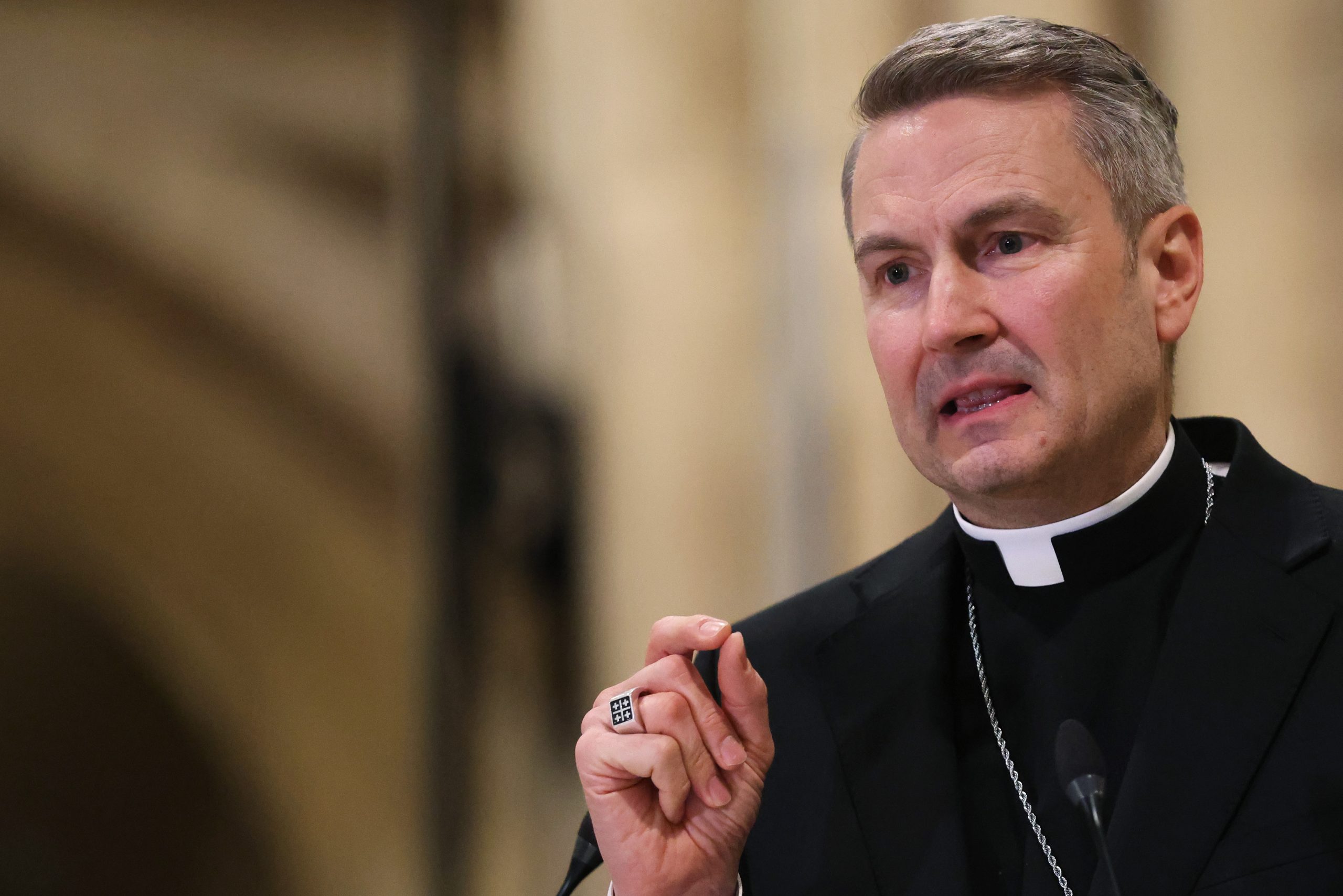
Archbishop Hicks warns New York assisted suicide law begins a “frightening era”
New York’s assisted suicide law will come into force on 5 August. Archbishop Ronald Hicks has warned it marks the beginning of a “new and frightening era” and questioned whether safeguards will remain in place over time The Archbishop of New York has warned that a “new and frightening era” will begin when the state’s assisted suicide law comes into force in August. Archbishop Ronald Hicks issued the warning as New York prepares to implement the Medical Aid in Dying Act on 5 August, allowing terminally ill adults who have been given six months or less to live to obtain life-ending drugs from a physician. Writing in First Things , Archbishop Hicks described the legislation as “the latest assault on human life” and questioned whether the measure would remain limited to the terminally ill. “When this law becomes effective, a new and frightening era begins in New York,” the archbishop wrote. “How long before this so-called ‘compassion’ for the terminally ill evolves from a ‘choice’ into an expectation to kill oneself for all sorts of vulnerable individuals, including those with disabilities, the elderly, and those in impoverished and medically underserved communities?” The law was passed by the New York legislature last year and signed by Governor Kathy Hochul in February. New York will become the latest American state to permit physician-assisted suicide, joining 11 states that have made provision for assisted suicide. The final version of the law includes a series of safeguards, including requirements that patients be assessed by two doctors, undergo a mental health evaluation, and observe a waiting period before receiving a prescription. However, these safeguards rarely work and are often later liberalised, with Vermont`s 2023 removal of in person consultations being a clear example. Opposition to New York’s legislation has been led by Catholic leaders and pro-life groups, who argue that legalising assisted suicide places pressure on vulnerable people and undermines respect for human life. Archbishop Hicks pointed to Canada as a warning of how such laws can expand beyond their original purpose. “In Canada, legislation that was allegedly intended only for the dying was quickly broadened to cover those with ‘chronic’ but not life-threatening illnesses, such as arthritis, who wish to seek a doctor’s help in killing themselves,” he wrote. The archbishop also criticised what he described as a contradiction between efforts to prevent suicide and the legalisation of physician-assisted death. “Admirably, New York State devotes tremendous resources to suicide prevention among our young people,” he wrote. “So too, many of our bridges and train crossings have signs reminding people that ‘life is worth living’, along with numbers to call for help. How at odds this is with the rush to help others end their lives.” Archbishop Hicks said there was a danger that assisted suicide could become influenced by outside pressures. “What begins as a personal choice could lead to situations where external forces, such as government agencies or insurance companies, begin to influence or even dictate end-of-life decisions,” he wrote. “This shift could undermine the respect and protection due to every human life.” The archbishop instead highlighted the role of palliative care and hospice services for those approaching death. He cited the example of Calvary Hospital and the Dominican Sisters of Hawthorne, which provide care for the terminally ill, and drew attention to guidance published by the New York State Catholic Conference on end-of-life decisions. Archbishop Hicks concluded by reaffirming Catholic teaching on the sanctity of life. “Our lives belong to God, and it is incumbent upon us to respect and protect our own lives, just as we rightly demand respect and protection for all human life, from conception until natural death,” he wrote. The Catholic Church has consistently opposed assisted suicide, teaching that the deliberate ending of human life is morally unacceptable and that the sick and dying should instead be accompanied through compassionate care.
Jun. 4, 2026