

Ai

Magnifica Humanitas offers a window into Leo XIV’s moral compass
Magnifica Humanitas is far more than an encyclical on artificial intelligence. Michael Haynes finds that Pope Leo XIV’s first major text offers a window into the moral vision shaping his pontificate With the launch of his first encyclical there is now no doubt that Leo’s choice of regnal name and entire papacy is centred around what he sees as a pivotal moment for the future of the Church and humanity. “Artificial intelligence needs to be disarmed,” said Leo XIV while launching Magnifica Humanitas today. “This moment needs words capable of attracting attention, of awakening consciences.” This is not to say that Leo opposes the seemingly relentless drive of artificial intelligence (AI) or the wider technological development of the modern world. While AI cannot be deemed “morally neutral”, Leo urged that “it must be at the service of all and the common good”. In short, this could be taken as a summation of the entire encyclical : a plea for the pursuit of the common good. It is certainly written as a response to AI and describes itself as being in the “age of AI”. But it is much wider than AI itself, as Leo appeared to launch his pontificate anew. Just as during his address to the College of Cardinals last May he outlined his papal priorities, in Magnifica Humanitas Leo revealed his deeper concerns about wider society. Given the length of the encyclical, no single analysis can justly summarise all that it contains, but one key element to examine first is what the text reveals about the Pontiff’s moral compass and his view of addressing crises in the Church and wider secular society. Far from being a mere appeal from another cleric for some generically responsible behaviour, this time regarding AI, Leo delved into the entire foundation of societal life. For Leo, the link between his encyclical and his namesake’s Rerum Novarum is palpable. “Like the earlier Leo, I feel entrusted to look upon another huge transformation with eyes of faith, with lucidity of reason, with openness to mystery, and with cries of the poor and the earth resounding in my heart,” he commented during the launch event. This is why Magnifica Humanitas does not deal briefly and solely with AI, but instead uses the topic to launch into a wider schooling of society about improving standards of behaviour and acting in a more Christian manner while seeking the common good. Leo’s assessment of how to preserve humanity from the dangers posed by AI is to attempt a ground-up re-education of society with God at the centre. In part this explains the considerable length of the text, which will have disappointed those looking for a return to briefer tomes. Of the 245 paragraphs and 224 footnotes, Pope Francis is cited 54 times, Benedict XVI 16 times, John Paul II nearly 40 times, and the Second Vatican Council 13 times. St Augustine also features throughout, with a quotation drawn from J.R.R. Tolkien. The tone is a mixture of different elements. Firstly, it is undeniably clear that Leo is seeking to address the result of many years of increasingly anti-Catholic secularism. “We live at a time of significant spiritual and cultural blindness,” he stated. In order to resolve this crisis, a crisis which then spills over into the use of AI, Leo urges society to return to elements intrinsic to Christian civilisation, such as pursuing the common good. “In the era of artificial intelligence, when human dignity is threatened by new forms of dehumanization, ours is the pressing duty to remain profoundly human,” he writes. “We must lovingly safeguard the grandeur of humanity bestowed upon us and revealed in its fullness in Christ, the splendour of which no machine can ever replace.” His approach to how best to use AI thus necessarily involves a quasi-catechesis on the re-Christianisation of society. Leo decried how “the risk of dehumanization — of building a future that excludes God and reduces the other to a means — is an ancient and ever-new temptation that today takes on a technical guise”. Should AI and wider technological development continue in the line of the Tower of Babel, then all will suffer, Leo argued. “Babel thus reveals the limits of any effort that, however grandiose, arises from self-affirmation, sacrifices human dignity for efficiency and aspires to reach heaven without God’s blessing.” “What saves humanity,” he added later in the encyclical, “is the divine love that descends into the most fragile point of our history and renews it from within.” The Pontiff urged all readers to recognise “the harmony that arises when all persons assume their own role and recognize that their strength comes from the Lord”. Such lines present a decidedly Christian tone to the text, if perhaps not a stridently or overtly Catholic one. It reads as Leo’s heartfelt appeal to the world at large to act in a more polite, respectful and ultimately Christian manner. “In order to protect the human person in the age of artificial intelligence, I believe that today we must once again reflect on the common good, the universal destination of goods, subsidiarity, solidarity and social justice,” wrote Leo, having noted that “a city founded on the common good implies, first and foremost, building on a firm relationship with God”. At other times the text seems less unabashedly Catholic than a papal encyclical ought confidently to appear. In large part this is due to the Pope’s reiteration of his predecessor’s text Dignitas Infinita regarding human dignity, and an underlying tone in the text which appears to orient the Pope’s proposed societal changes as being chiefly desirable because they benefit man, rather than being linked to a conversion of hearts and minds to Catholicism. Assuredly, in certain sections the Pope notes the importance of having God at the foundation of activity, but in others a far more secular tone is present. Modern teaching on human dignity tends to upend traditional teaching, generally remaining silent on supernatural dignity and then elevating natural dignity. For a more detailed analysis on the topic than is possible here, see this correspondent’s article and book on the topic. Citing this teaching on human dignity, Leo writes that it is this which “requires us to shape the way we live together, including our economic and political choices, and the makeup of our cities”. Yet such an aspect is also very much in line with Leo’s papal style: avoiding polemics, and outwardly remaining calm as he seeks to find common ground with all in an apparent attempt to defuse tensions and foster peaceful dialogue. This does not stop him from once again decrying abortion and euthanasia. Nor did Leo feel restrained in making a bold statement declaring that the Church’s longstanding teaching on a “just war” is “now outdated” since “humanity possesses far more effective and capable tools for promoting human life and resolving conflicts, such as dialogue, diplomacy and forgiveness”. Indeed, this latter point places his repeated calls for peace in a new light, given that, for Leo, it appears that armed conflict can no longer be justified, a pronouncement which is not supported either by Scripture or Tradition. For an encyclical billed as being solely about AI, the text delivers far more than that. It reads as a window into Leo’s moral and social views and thus into the style and priorities of his pontificate. Vaticanists waiting for a “tell” on Leo have finally been granted an inside look. Leo highlights the Christian foundation of society before noting that only Christianity can lead society and mankind to truly flourish. He then moves to address questions relating to the common good, alongside topics likely to interest more secular readers, including his passionate appeals regarding armed conflict and the growing use of AI in fuelling the global war industry. But in closing he returns once more to his overtly Christian theme, emphasising the importance of prayer in sustaining any endeavour aimed at fostering a better society in pursuit of the common good. “The spirituality that we need,” he wrote, “is a Eucharistic spirituality, that is, a spirituality of ecclesial unity in love.” Leo urged society to recognise the beauty that comes not from AI’s takeover of the world, or even man himself through transhumanism, but from the frailty of humanity which must rely upon God for everything. “Our rule,” he concluded, “must be the acceptance of human limitations as a natural and positive reality, and should be characterized by shared responsibility and a language characterized by the Gospel.” Michael Haynes is an English journalist in the Holy See Press Corps. He serves as Vatican Correspondent and Analyst for Pelican+ , while readers can follow him at Per Mariam and on X @MLJHaynes .
May 25, 2026
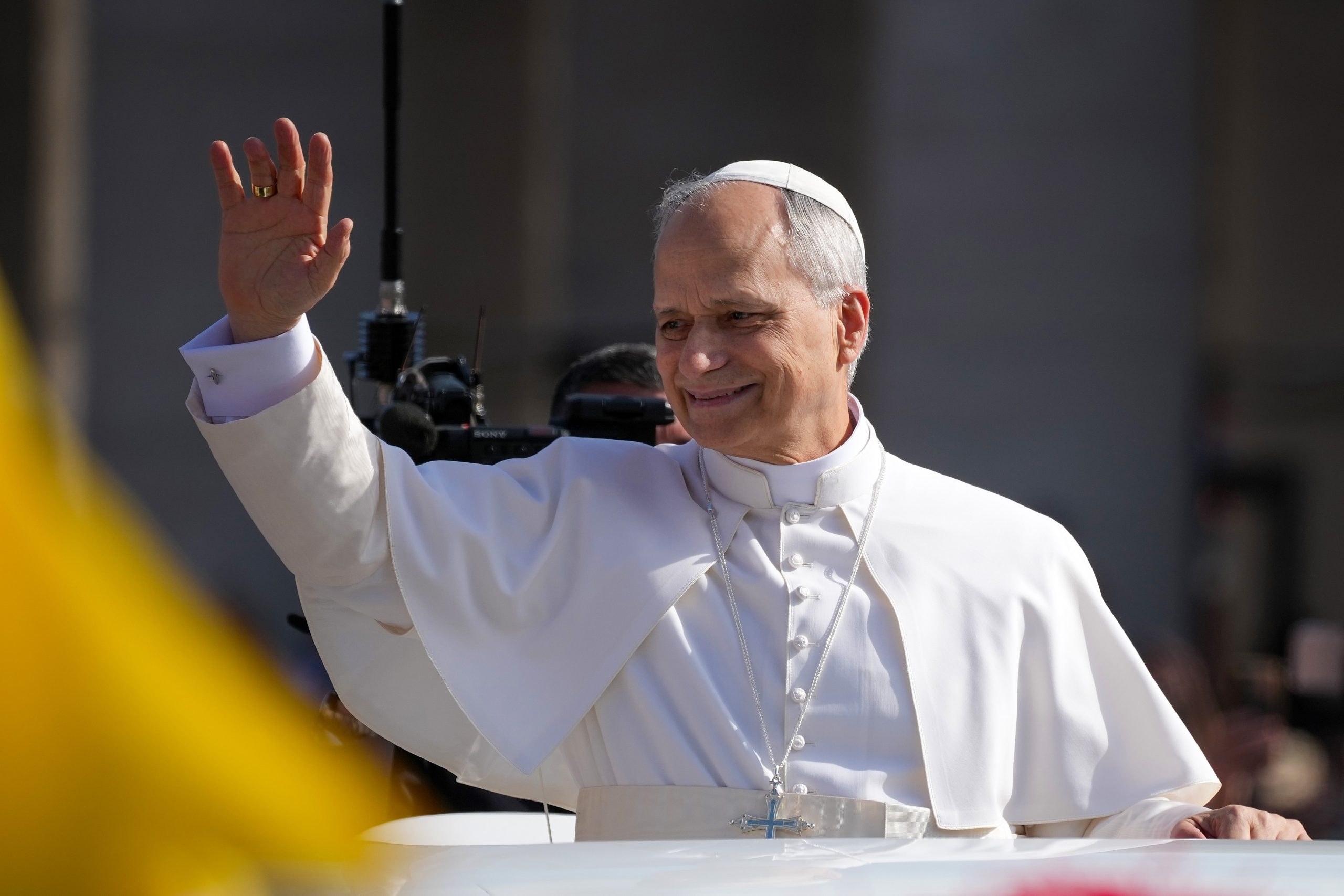
Inside Magnifica Humanitas: Pope Leo XIV’s warning on AI
Pope Leo XIV has published the first encyclical of his pontificate, warning that artificial intelligence risks creating a new “Tower of Babel” built on technocratic power, dehumanisation and moral confusion Pope Leo XIV has published the first encyclical of his pontificate, issuing a warning against the dangers posed by artificial intelligence and what he describes as a growing “culture of power” threatening the dignity of the human person. Magnifica Humanitas (“Magnificent Humanity”), released by the Vatican on 25 May after being held under strict embargo until late Monday morning in Rome, is the Holy Father’s most substantial intervention yet in the global debate surrounding AI and the technological transformation of society. The encyclical argues that humanity now stands between two paths: the construction of a new “Tower of Babel” founded on pride, uniformity and technocratic power, or the rebuilding of a new Jerusalem grounded in solidarity, communion and God-centred human fraternity. “Humanity, created by God in all its grandeur, is today facing a pivotal choice: either to construct a new Tower of Babel or to build the city in which God and humanity dwell together,” the Pope writes in the opening paragraphs of the encyclical. The 230-paragraph document is the first major social encyclical of Leo XIV’s pontificate and immediately places him within the long tradition of modern Catholic social teaching stretching back to Pope Leo XIII’s Rerum Novarum in 1891. Far from rejecting technological progress outright, Leo XIV repeatedly insists that technology is a fundamentally human achievement capable of serving the common good. However, he warns that technological systems can never be considered morally neutral and must remain subordinate to the dignity of the human person. “We cannot consider AI to be morally neutral,” the Pope states. The encyclical presents artificial intelligence as one of the defining res novae — “new things” — confronting the modern world, the language traditionally used by the Church to describe the upheavals of the industrial revolution. The document states that unprecedented technological power is increasingly concentrated in the hands of private actors operating beyond effective political oversight, creating new dangers for democracy, labour, truth and peace. “More power does not necessarily imply something better,” it states. Much of the encyclical is devoted to explaining why the Church believes artificial intelligence cannot be equated with human intelligence. The Pope insists that AI systems, however sophisticated, remain incapable of moral reasoning, authentic relationships or genuine human experience. “So-called artificial intelligences do not undergo experiences, do not possess a body, do not feel joy or pain,” the encyclical says. “Nor do they have a moral conscience.” Leo XIV repeatedly returns to the theme of human dignity, grounding the entire encyclical in the belief that every person possesses an “infinite dignity” rooted in creation in the image of God rather than in usefulness, efficiency or productivity. “The fundamental dignity of each person,” he writes, “is neither acquired nor earned, nor does it need to be justified.” The Pope warns that the unchecked growth of AI risks creating new forms of dehumanisation in which human beings are valued according to economic output, algorithmic usefulness or digital visibility. He cautions against reducing human judgement to automated systems and criticises cultural movements that treat technological transcendence as a substitute for spiritual fulfilment. One of the most striking sections of the document is its sustained critique of transhumanist and posthumanist ideologies, which seek to overcome biological limitations through technological enhancement. Without naming particular movements or figures, Leo XIV argues that such projects reflect humanity’s recurring temptation to seek salvation apart from God. “Babel thus reveals the limits of any effort that, however grandiose, arises from self-affirmation, sacrifices human dignity for efficiency and aspires to reach heaven without God’s blessing,” the encyclical says. The encyclical also addresses the growing political and social consequences of AI-generated misinformation and manipulated media. Leo XIV warns that artificial intelligence is rapidly transforming the public square and undermining trust in democratic institutions through the spread of falsehoods and synthetic content. “Disinformation finds a powerful amplifier in AI,” the document states. The Pope argues that truth itself must be defended as a “common good” and calls for what he describes as an “ecology of communication” rooted in responsibility, education and human relationships rather than manipulation and profit. “The search for truth is an essential element of democracy,” he writes. Questions surrounding labour and the future of work occupy another substantial portion of the encyclical. Leo XIV warns against economic systems that prioritise efficiency over workers and expresses concern about automation displacing millions of people while weakening social bonds and family life. The Pope also calls for stronger political oversight of AI systems, greater international cooperation and safeguards against the monopolisation of data and digital infrastructure. In one of the encyclical’s most arresting phrases, Leo XIV urges world leaders to “disarm AI”. “Disarming AI means freeing it from the mentality of ‘armed’ competition,” the Pope writes, warning against an escalating technological arms race between states and corporations. The document devotes an extended section to the dangers posed by autonomous weapons systems and the growing use of AI in warfare. Leo XIV argues that artificial intelligence is accelerating the pace and destructiveness of conflict while distancing human beings from moral responsibility for violence. “AI acts as an accelerating factor” in changing the nature of war, he writes. The Pope condemns what he calls the “normalisation of war” and criticises a global culture increasingly resigned to permanent conflict, weakened diplomacy and the collapse of multilateral institutions. “This culture of power infiltrates society,” he warns, “normalising war.” Despite the encyclical’s sombre tone, the document concludes on a strongly hopeful note centred on the Christian doctrine of the Incarnation. Against ideologies promising technological transcendence, Leo XIV points to Christ as the true fulfilment of humanity. “At the heart of everything is the mystery of the Incarnation, the Word who became flesh and dwelt among us,” he writes. The final pages call on Catholics to resist despair and instead help build what the Pope repeatedly describes as a “civilisation of love” capable of directing technological progress towards authentic human flourishing. “In the era of artificial intelligence,” the Pope writes, “when human dignity is threatened by new forms of dehumanisation, ours is the pressing duty to remain profoundly human.”
May 25, 2026
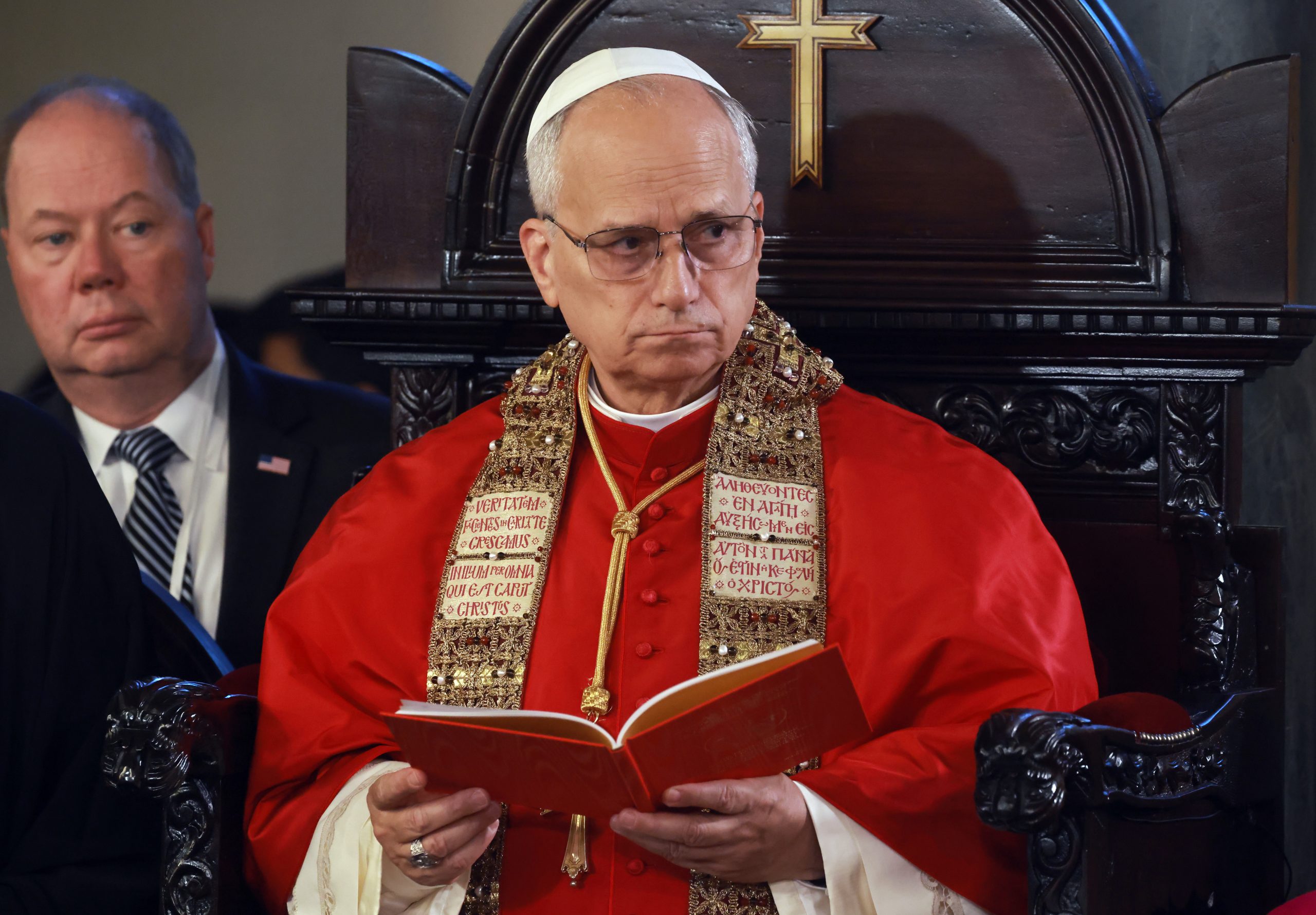
Pope Leo XIV’s first encyclical now expected later this month
Pope Leo XIV’s first encyclical, expected to address artificial intelligence, international peace and the crisis in international law, is now expected later this month after the Holy See Press Office indicated an announcement regarding the document will be made on May 22 Pope Leo XIV’s first encyclical, which was widely reported as being due to be signed today, is now not expected to be signed and published until later this month. According to reports from the German Catholic news agency KNA, it had been due to be signed on May 15. However, Matteo Bruni, director of the Holy See Press Office, told journalists that an announcement regarding the document will be made on May 22. Circulating under the provisional title Magnifica Humanitas , it is expected to address a range of issues including artificial intelligence, international peace and what sources describe as a crisis in international law. The encyclical follows earlier indications that the Holy See had been preparing a document focused specifically on artificial intelligence. At the beginning of February, reports pointed to work under way on a text examining the ethical and anthropological implications of emerging technologies. Pope Leo XIV has already spoken about the risks associated with technological development, warning of the dangers posed by “uncontrolled technology” and stressing the importance of safeguarding human dignity. According to reports, the encyclical will also address geopolitical instability and the perceived weakening of international legal structures. The document is expected to set out the Church’s response to some of the principal challenges facing humanity in the 21st century. The anticipated date of May 15 would have matched the signing and publication of Rerum Novarum , Pope Leo XIII’s best-known encyclical, which was issued on May 15, 1891. The document is regarded as the foundational text of modern Catholic social teaching and addressed the condition of workers during the industrial age. The same date was chosen in 1931 by Pope Pius XI for Quadragesimo Anno , which developed the Church’s teaching on social order and introduced the principle of subsidiarity. Thirty years later, on May 15, 1961, Pope John XXIII promulgated Mater et Magistra , which focused on economic justice and social development. However, with an announcement now expected on May 22, it is possible that the release date may instead coincide with John Paul II’s Ut Unum Sint , on ecumenism, which was issued on May 25, 1995, or Pope Leo XIII’s Annum Sacrum , which was issued on May 25, 1899 and consecrated the entire human race to the Sacred Heart of Jesus. The expected treatment of artificial intelligence would build on recent Vatican teaching. In January 2025, the Dicastery for the Doctrine of the Faith and the Dicastery for Culture and Education issued Antiqua et Nova , a joint note on “the relationship between artificial intelligence and human intelligence”. The document said AI could bring “important innovations” but warned that it also carried the danger of deepening inequality, manipulating public opinion and expanding “the instruments of war well beyond the scope of human oversight”. It added that artificial intelligence “should not be seen as an artificial form of human intelligence, but as a product of it”, and insisted that it “should be used only as a tool to complement human intelligence rather than replace its richness”. As yet, no date has been confirmed and the title Magnifica Humanitas remains provisional.
May 15, 2026