

Abbot Schr Der
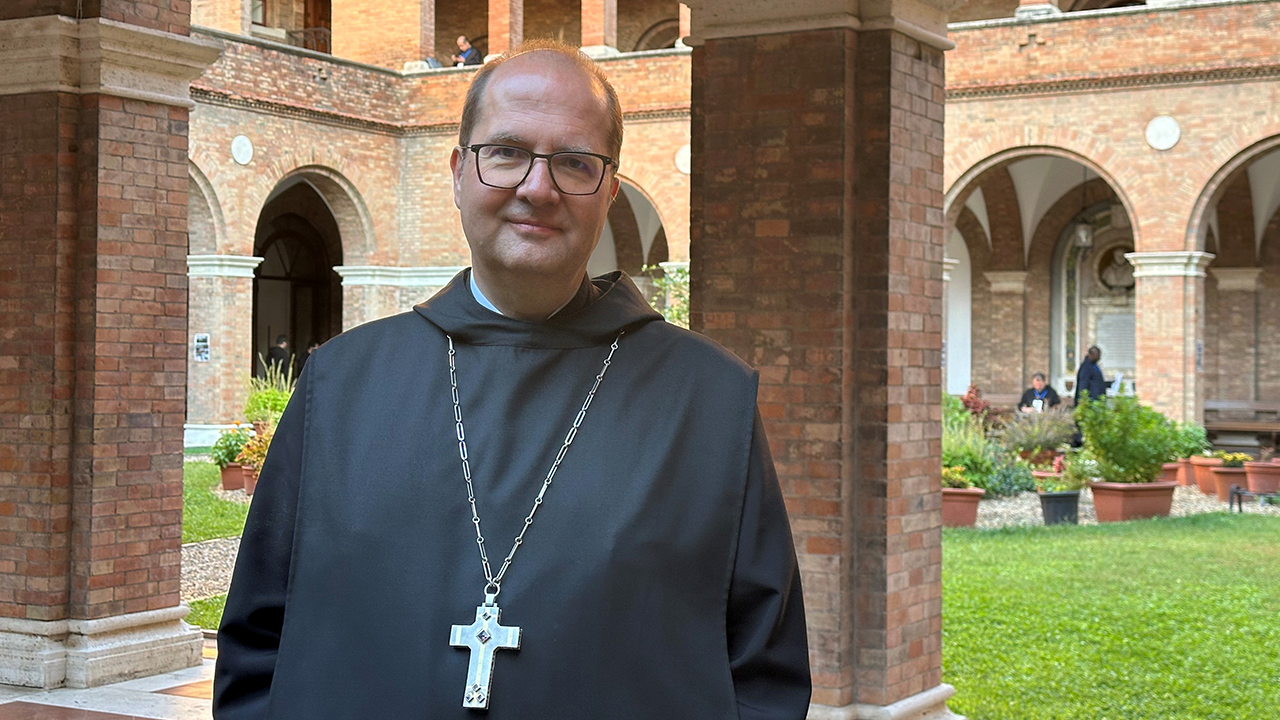
Benedictine Abbot Primate says the Latin Mass has a ‘lasting place’ in the Church
The Abbot Primate of the Benedictines has said the Traditional Latin Mass has secured a lasting place in the Church and should be permitted in some areas The Abbot Primate of the Benedictines has said that the TLM has acquired a lasting place within the Church and “should be permitted, at least in some areas”. Fr Abbot Jeremias Schröder, who has held the office since September 2024, made the remarks while reflecting on developments in monastic life at Rome’s Sant’Anselmo. He pointed to the lived experience of Benedictine communities, where the older and newer forms of the liturgy continue to exist side by side. “Among us Benedictines, traditional liturgy and modern liturgy coexist in a very harmonious way,” Abbot Schröder said. Abbot Schröder added that within the Confederation there are “about ten abbeys that celebrate according to the old rite, most of them in France”, many belonging to the Solesmes Congregation, where the majority nevertheless use the post-conciliar missal. He also referred to the group of monasteries associated with the Abbey of Fontgombault, as well as Le Barroux and its daughter houses, noting their full integration within the wider Benedictine family. Reflecting on the broader question, he said: “After Pope Benedict opened doors here, it will no longer be possible to completely eradicate the old form. We have brothers and sisters who have built their religious lives on this form of prayer and Mass. This has now also gained a place in the Church and should be permitted, at least in some areas.” His remarks came as he described monastic life as marked by contrasting trends across different regions. Some communities, he said, are in visible decline, while others have experienced unexpected renewal. “We’re dealing with two opposing movements,” he said. “On the one hand, there are indeed communities that are slowly dying out, and managing this transition well is a major challenge. And then there are others that had already been written off but are managing to recover.” He cited the case of Georgenberg Monastery in Tyrol, where a planned winding down did not take place after new members joined the community. “I was actually supposed to wind it down, so to speak, but then a few new members joined, and the community is now vibrant again,” he said. Asked whether stricter observance plays a decisive role in the survival of religious houses, he rejected a simple distinction. “I don’t know if strictness is the right distinguishing criterion,” he said, instead pointing to continuity and the internal life of communities as more significant factors. “If there are no new members for a long time, something breaks down. The quality of community life is very important. You can sense whether there are shared goals and a good sense of togetherness. Such monasteries always attract people,” he said, adding: “I am confident that this way of life will not die out.” On practical questions affecting contemporary monastic life, he said that the use of smartphones and social media is handled at the level of individual monasteries. “Each monastery decides that for itself,” he said, though he stressed that the issue must be addressed during formation. “It absolutely has to be a topic in novitiate training, and renunciation has to be practised,” Abbot Schröder said, noting that in some cases this includes handing in mobile phones during the novitiate. The extent of restrictions, he added, varies according to the character of each community, with more contemplative houses likely to adopt stricter approaches than those engaged in pastoral or educational work. He also referred to the growing use of artificial intelligence within ecclesiastical settings, particularly in multilingual contexts. “This applies especially to simultaneous interpretation at synods and assemblies,” Abbot Schröder said. “And I must say, simultaneous interpretation via AI works really well.” Abbot Jeremias Schröder joined St Ottilien Archabbey in Germany as a novice in 1984. In October 2000 he was elected archabot. In 2015, he was selected to take part at the Fourteenth Ordinary General Assembly of the Synod of Bishops as one of the elected representatives of the International Union of Superiors General. In 2024 he was elected as Abbot Primate of the Benedictine Confederation.
May 5, 2026