

The Vatican
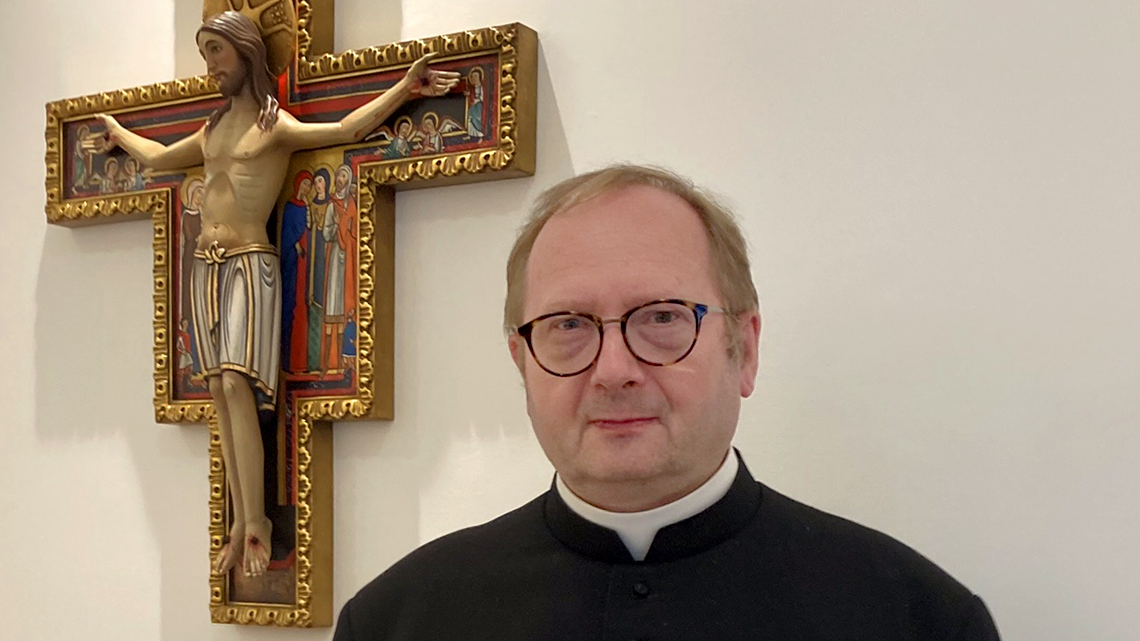
Ordinariate bishop rejects claims priests ordered to concelebrate
Bishop David Waller has dismissed reports that Ordinariate clergy were instructed by Rome to concelebrate Holy Mass, calling the claim a “mischievous lie” The Bishop of the Personal Ordinariate of Our Lady of Walsingham has rejected claims that priests of the ordinariates have been instructed to concelebrate Mass, insisting that no such directive has been issued by Rome and describing the reports as false. The story first circulated on April 23 on the website Rorate Caeli, which claimed that the Prefect of the Dicastery for Divine Worship and the Discipline of the Sacraments, Cardinal Arthur Roche, had “ordered” ordinariate clergy to concelebrate and had further prohibited priests from functioning as deacons or subdeacons within ordinariate liturgies. The claims were penned by the liturgist Peter Kwasniewski, who suggested that the measures followed a meeting in Rome and reflected concerns about liturgical practice within the ordinariates. However, Bishop David Waller told Niwa Limbu, AdVaticanum Vatican correspondent, that the reports were unfounded. “It is totally untrue,” he said. “It is a mischievous lie!” He said that no new instructions had been issued and that recent discussions among the three ordinaries had been limited to reiterating existing norms. “What is true is that the three Ordinariate bishops had a conversation about liturgy and have reminded our priests that Divine Worship: The Missal is governed by the rubrics printed in the rite, its rubrical directory and the General Instruction of the Roman Missal. Nothing new there, it’s all printed in the missal. It is not permissible to introduce different rubrics from different rites – never was.” He added: “The three bishops have simply reminded people what the rubrics of our rite require. Any rite is both words and rubrics and must be followed.” Subsequently, Peter Kwasniewski acknowledged that Bishop David Waller had denied that a meeting with Cardinal Arthur Roche had taken place. He wrote that this “may be technically correct”, adding that his source had clarified that the meeting in question involved Bishop Steven Lopes rather than the three ordinaries together, although originally it was noted that it was the “Bishops of the Ordinariate”. “This may be technically correct; when queried, my source specified that it was a meeting of Bishop Steven Lopes with Cardinal Roche, which makes sense if Roche perceived a problem specifically with the more traditionally minded members of the Anglican Ordinariate in the United States,” he wrote. In a separate communication with The Pillar, Bishop David Waller reiterated that no priest would be compelled to concelebrate. The bishop said that concelebration was “permitted and encouraged” but added: “Any priest has the right to celebrate individually. That’s law, not just for the ordinariate.” He also denied that any meeting with Cardinal Arthur Roche had taken place during a visit to Rome in March. The visit, he said, included an audience with Pope Leo and meetings with officials of the Dicastery for the Doctrine of the Faith, which has oversight of the ordinariates. In the email cited by The Pillar, he explained that he had discussed liturgical matters with Bishop Steven Lopes and Archbishop Anthony Randazzo. “The three bishops did discuss some liturgical matters and note, as a matter of fact, that, as is the case with any rite, ‘Divine Worship’ must be celebrated according to its rubrics,” he said. “The rubrics are: those in the text of the rite itself, the rubrical directory printed in the missal, the General Instruction of the Roman Missal, and the Ceremonial of Bishops.” He added: “In some places, very few in the UK, there has been a tendency to draw on rubrics from other rites, and that is not permissible.” As an example, he said that a priest might use the text of the ordinariate missal while adopting the manual actions of the older Roman Rite. “Any rite is words and rubrics, and it is a liturgical abuse to mix and match,” he said. Rorate Caeli later amended its report, removing the reference to a meeting between the three bishops and Cardinal Arthur Roche. In a note appended to the article, it said that Bishop David Waller had denied such a meeting, while maintaining that a separate encounter involving Bishop Steven Lopes may have taken place. A source close to Bishop Steven Lopes told AdVaticanum that a message had circulated internally within Ordinariate priestly circles in America but indicated that it was unlikely that he had met Cardinal Arthur Roche, noting that all three bishops had followed similar itineraries in Rome. The Personal Ordinariate of Our Lady of Walsingham was established in 2011 following the promulgation of Anglicanorum coetibus by Pope Benedict XVI, providing a structure for groups of former Anglicans to enter into full communion with the Catholic Church while retaining elements of their liturgical and spiritual patrimony. It was followed by the establishment of the Personal Ordinariate of the Chair of St Peter in 2012 for North America and the Personal Ordinariate of Our Lady of the Southern Cross for Australia and parts of Asia.
Apr. 24, 2026
Vatican sets out next phase of Synod on Synodality
The Vatican has confirmed the next stage of the Synod on Synodality, with a series of international meetings planned through to 2028 The Vatican has outlined the next stage of the Synod on Synodality, confirming that a series of international meetings will take place over the coming two years. In a statement issued on April 17, the General Secretariat of the Synod said it had convened the XVI Ordinary Council in an online session chaired by Cardinal Mario Grech. The meeting opened “with a moment of prayer led by Sr Nathalie Becquart”, before turning to what the Secretariat described as “the current phase of implementation of the Final Document of the XVI Assembly”. It forms part of what it describes as the “implementation phase” of the 2024 assembly. The statement said that the Secretary General “opened the session with several communications concerning the current phase of implementation of the Final Document of the XVI Assembly, the work of the Study Groups, whose final reports are in the process of being published, and the forthcoming organisation of two meetings”. Among the key developments is the convocation of a preparatory gathering at the Vatican from June 23 to 25. According to the Secretariat, this meeting will serve to prepare the continental evaluation assemblies scheduled for the first months of 2028. Those invited include “one representative of the Patriarchs of the Council of the Patriarchs of the Eastern Churches, the Presidents of the International Meetings of Episcopal Conferences, as well as the Presidents of the Episcopal Conferences of the United States and Canada, each accompanied by the Coordinator of the Synodal Team of the respective body”. The statement added: “The Holy Father Leo XIV will take part in a specific working session.” The June meeting forms part of a wider timetable which will see the synodal process continue through to 2028, when continental assemblies will assess the reception and application of the Synod’s conclusions. A global assembly in Rome is expected to follow later that year. The Secretariat also confirmed that a further document to guide this phase is in preparation. During the April 17 session, Fr Giacomo Costa presented “a proposal for a document for the implementation phase of the Synod, particularly concerning the organisation of the evaluation assemblies”. The Council, it said, “discussed the document at length and approved its general structure”. It added that the final version, intended as a complement to the “Pathways for the Implementation Phase” published in June 2025, “will be revised by the Ordinary Council and published by the beginning of summer”. In a separate development, the Vatican provided new details of a meeting of bishops’ conference presidents to be held in Rome from October 7 to 14, focusing on Amoris laetitia. The gathering had previously been announced by Pope Leo XIV in a message marking the tenth anniversary of the document’s publication. According to the Secretariat, the October meeting “will be organised by the Dicastery for the Laity, the Family and Life”, with the General Secretariat of the Synod providing “organisational and methodological support”. It stressed that “this is not a synodal assembly, but a consultative meeting of the Holy Father with the Presidents of the Episcopal Conferences and of the Synods of the Eastern Catholic Churches sui iuris”. In his March 19 message, Pope Leo XIV said the purpose of the gathering would be “to proceed, in mutual listening, to a synodal discernment on the steps to be taken in order to proclaim the Gospel to families today […] and taking into account what is currently being done in the local Churches”. The April 17 statement concluded with a note of thanks to Bishop Luis Marín de San Martín for his service to the Secretariat, stating that members had asked Cardinal Grech “to convey to H.E. Msgr Luis Marín de San Martín their gratitude for his years of service”, and assuring him of their prayers following his appointment as Almoner of His Holiness and Prefect of the Dicastery for the Service of Charity. The Vatican’s latest moves on the Synod on Synodality indicate that the process has been established as a continuing feature of Church governance and, under Pope Leo XIV, it is acquiring a firmer institutional shape. What is now emerging is a phase of consolidation, with the Holy See proceeding in a measured manner. There has been no pause or quiet shelving of a process associated with Pope Francis. On the contrary, it is moving forward with precision, as the promised roadmap, due in early summer, will formalise a multi-year implementation phase running through to 2028. This continuity indicates that synodality is now treated as a structural principle. The Synod of Bishops, established by Pope Paul VI in 1965, was conceived as a consultative body assisting the Roman Pontiff. What has since developed is an expansion of its process, including a prolonged phase of reception and evaluation. The personal involvement of Pope Leo XIV is also notable, as the Secretariat has confirmed that he will take part in a specific working session during the June meeting. Popes do not routinely participate in mid-level preparatory gatherings, which suggests a direct interest in shaping the outcome. The explicit inclusion of the presidents of the United States and Canadian episcopal conferences, named alongside their synodal coordinators, is also notable. Other regions are referenced more generally through continental bodies such as CELAM, CCEE and SECAM. This level of specificity suggests continued attention to the reception of synodality in the English-speaking world, particularly in North America. During the 2023–2024 assemblies, several bishops from the United States were among those who raised concerns about doctrinal clarity and safeguards. The forthcoming June meeting can therefore be understood as part of an effort to ensure alignment ahead of the evaluation stage beginning in 2028. A similar approach is evident in the handling of the October meeting on Amoris laetitia. The Vatican has made clear that this will not be a synodal assembly but a consultative meeting organised by the Dicastery for the Laity, the Family and Life, with support from the Synod Secretariat. A decade after its publication, the document’s treatment of the divorced and remarried remains contested. Holding the meeting outside the formal synodal framework appears intended to manage the tone of the discussion. This dual approach, advancing synodality while containing its more contentious applications, indicates that Pope Leo XIV is maintaining the trajectory set by Pope Francis while seeking to give it a more stable institutional form.
Apr. 23, 2026
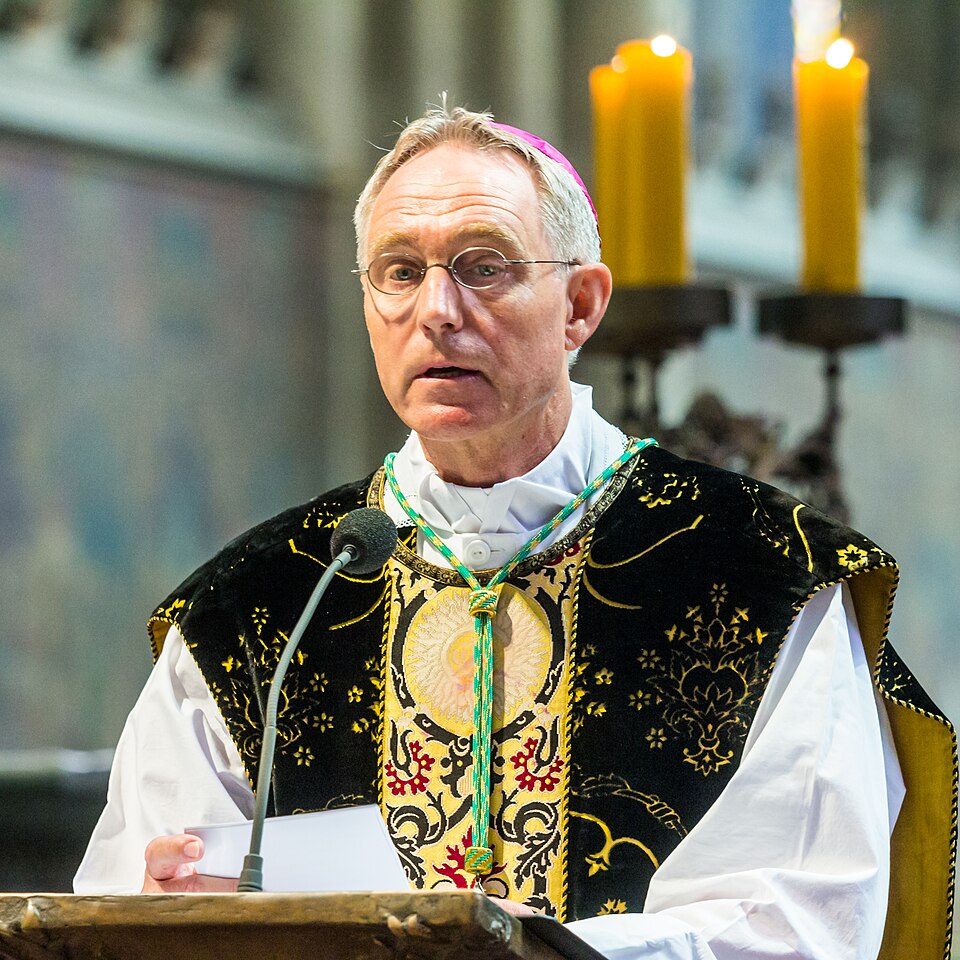
Archbishop Gänswein on Benedict and Francis relationship
In an interview with La Repubblica, Pope Benedict’s longtime personal secretary discusses Benedict XVI and Pope Francis’s relationship, including tensions over the traditional Mass Archbishop Georg Gänswein has said that Pope Emeritus Benedict XVI never criticised the restrictions imposed on the traditional Mass by Pope Francis, despite being personally troubled by them. In an interview published by La Repubblica on April 20, Archbishop Gänswein, who served for years as Benedict’s personal secretary, said: “Benedict never commented on Pope Francis’s motu proprio Traditionis custodes. In my book I wrote that when we read L’Osservatore Romano [about Traditionis custodes], Benedict’s heart grew heavy. That is true, but I am the one saying it, not him.” The archbishop, now Apostolic nuncio in Lithuania, also spoke at length about the unprecedented coexistence of two popes following Benedict’s resignation in 2013. “There was only one Pope. The other was still called Pope, but he was in reality the Pope Emeritus. That is a very important difference,” he said. He added that Pope Emeritus Benedict XVI himself took visible steps to mark the distinction, removing elements of papal dress and adopting a simpler presentation, even as he retained the title “Pope Emeritus”, which Gänswein confirmed “he chose himself”. Responding to claims that the resignation had been shaped by scandal, Gänswein rejected any link to the Vatileaks scandal or other controversies. “None of what you have recalled had anything to do with it. Neither Vatileaks, nor the so called ‘gay lobbies’, nor anything else. The resignation was the fruit of deep reflection and intense prayer. The Pope put the question to his conscience and then made his decision.” He recalled the moment of the conclave that elected Francis, describing how he saw the white smoke from his office before going to the Sala Regia. “Then the door opened and from a distance I saw the cardinals congratulating the new Pope. Almost at once, the name Jorge Mario Bergoglio spread through the entire hall like wildfire.” When he met the newly elected Pope, Gänswein said Francis spoke first: “I would like to meet Benedict. Can you help me?” The first meeting between the two men took place at Castel Gandolfo on March 23, 2013. Gänswein said the encounter was marked by mutual deference. “When they entered the chapel, Pope Benedict wanted to let Pope Francis go first, but Francis refused. The same thing happened with the prie-dieu.” He added that Pope Emeritus Benedict XVI had prepared a box of documents relating to the Vatileaks inquiry, which he handed over personally. “He wanted to explain the contents to Francis and tell him what he thought. He did it in writing, as usual, and put everything inside.” Archbishop Gänswein confirmed that Pope Francis chose not to reside in the Apostolic Palace after his election. “The Pope told me to find him something else,” he said, admitting that he initially did not take the request seriously. He later understood the decision more clearly when Francis explained: “I have never lived in such large rooms. I want to live in smaller ones.” The Pope subsequently remained at the Casa Santa Marta. The interview also addressed perceptions of tension between the two pontificates. Archbishop Gänswein said reports of sustained opposition organised around Benedict were exaggerated. “From what I experienced, the real situation was greatly exaggerated.” He acknowledged that “there were some observations about Francis’s behaviour and choices”, but added: “It is perfectly normal to comment on a Pope’s decisions; it is not in itself forbidden.” Reflecting on his own position, Archbishop Gänswein referred to a remark he had made about carrying the “mark of Cain”. He clarified: “I did say that, but in general, not with reference to Pope Francis.” He added that Benedict’s figure “aroused both friends and enemies”, and that his own association with the former Pope had remained a defining factor. Archbishop Gänswein also described the personal relationship that developed between the two popes in more ordinary terms. He pointed to small gestures, including visits and the exchange of gifts, as evidence of a cordial rapport. “One could sense it, atmospherically, so to speak, from the climate that had been created between them,” he said, noting that such gestures were “signs of mutual attention”. He also gave a detailed account of the moment following Benedict’s death, when Francis arrived at the Mater Ecclesiae Monastery. “Pope Francis had told me: ‘When the hour comes, please call me directly.’ I did so on my mobile phone. Shortly afterwards the Pope arrived.” Archbishop Gänswein said: “Francis blessed his predecessor, then sat down beside him, remained in silence for a few minutes, and then we all prayed together.” Asked about a comparison between recent popes, Gänswein declined to offer a clear characterisation of the current pontificate beyond noting the significance of the name. “That is a difficult question at the moment,” he said. “But the name Leo itself already says something, don’t you think?” The remarks of Archbishop Georg Gänswein over recent years, taken together with testimony from those close to Pope Emeritus Benedict XVI, suggest a more restrained relationship than some accounts presented during the years of his retirement alongside Pope Francis. The evidence increasingly suggests that the relationship may have been difficult, even if this was never publicly acknowledged by Pope Emeritus Benedict XVI himself. His silence, long interpreted as serene acquiescence, now appears as an act of discipline intended to avoid any impression of a divided papacy. The clearest point of tension concerns the motu proprio Traditionis custodes, which reversed the more permissive framework established by Benedict for the older form of the Roman rite in Summorum Pontificum. Archbishop Gänswein said in an interview with Die Tagespost on January 20, 2023: “It was very hard. I believe that reading the new motu proprio broke Pope Benedict’s heart because his intention had been to help all those who had found their home in the traditional Mass, to find inner peace, liturgical peace, so that they would abandon the position of Archbishop Lefebvre.” That judgement, offered by the man who knew Benedict most intimately in his final years, corresponds to a known priority of Benedict’s pontificate: the reconciliation of those attached to the older liturgy. Sources close to Archbishop Gänswein and to Pope Emeritus Benedict XVI have further confirmed this, telling AdVaticanum that the promulgation of Traditionis custodes “caused [Benedict] pain”. That pain was not expressed publicly. Instead, Pope Emeritus Benedict XVI maintained the silence he had promised upon his resignation. More significant, and less often discussed, is the way Archbishop Gänswein’s own position further complicates the picture. Once Prefect of the Papal Household, he was effectively sidelined and later sent to Germany and then the Baltics as nuncio. The same sources told AdVaticanum that Pope Emeritus Benedict XVI made both formal and informal requests that his secretary be allowed to remain in the Vatican. They said: “There wasn’t an actual relationship. Sometimes Benedict asked favours of Francis to keep Gänswein in the Vatican and not remove him, both formally and informally.” These requests, it is said, went unanswered. This asymmetry is also discernible in reflections offered by the papal biographer Peter Seewald in an interview with Nico Spuntoni. Seewald contrasted the widely remembered homily delivered by then Cardinal Ratzinger at the funeral of Pope St John Paul II with the more restrained tone of the rites following Benedict’s own death. “We all remember the warm words that Cardinal Ratzinger spoke at the requiem for John Paul II,” he said. “But no one remembers Bergoglio’s words at the requiem for Benedict XVI. They were as cold as the whole ceremony, which had to be rather brief so as not to honour his predecessor too much. At least that was my impression.” Pressed on whether such a judgement was too severe, Seewald continued: “I mean, how does one manifest friendship? With a mere statement in words, or by living it?” He pointed to differences “in temperament, culture, intellect and above all in the direction of the pontificates”, adding that Benedict had promised obedience and “remained silent so as not to give the slightest impression of wanting to interfere in his successor’s governance”. That silence, he suggested, was not without consequence. “Benedict trusted Francis. But he was bitterly disappointed several times.” Historically, the coexistence of a reigning Pope and a Pope Emeritus was itself without precedent in the modern Church. Pope Emeritus Benedict XVI sought to define that relationship through withdrawal, discretion and loyalty. His intention was to remove himself entirely from the exercise of authority. Yet the very novelty of the situation meant that every gesture and every silence acquired a significance beyond the personal.
Apr. 23, 2026