

Culture
The troubled faith of Vincent van Gogh
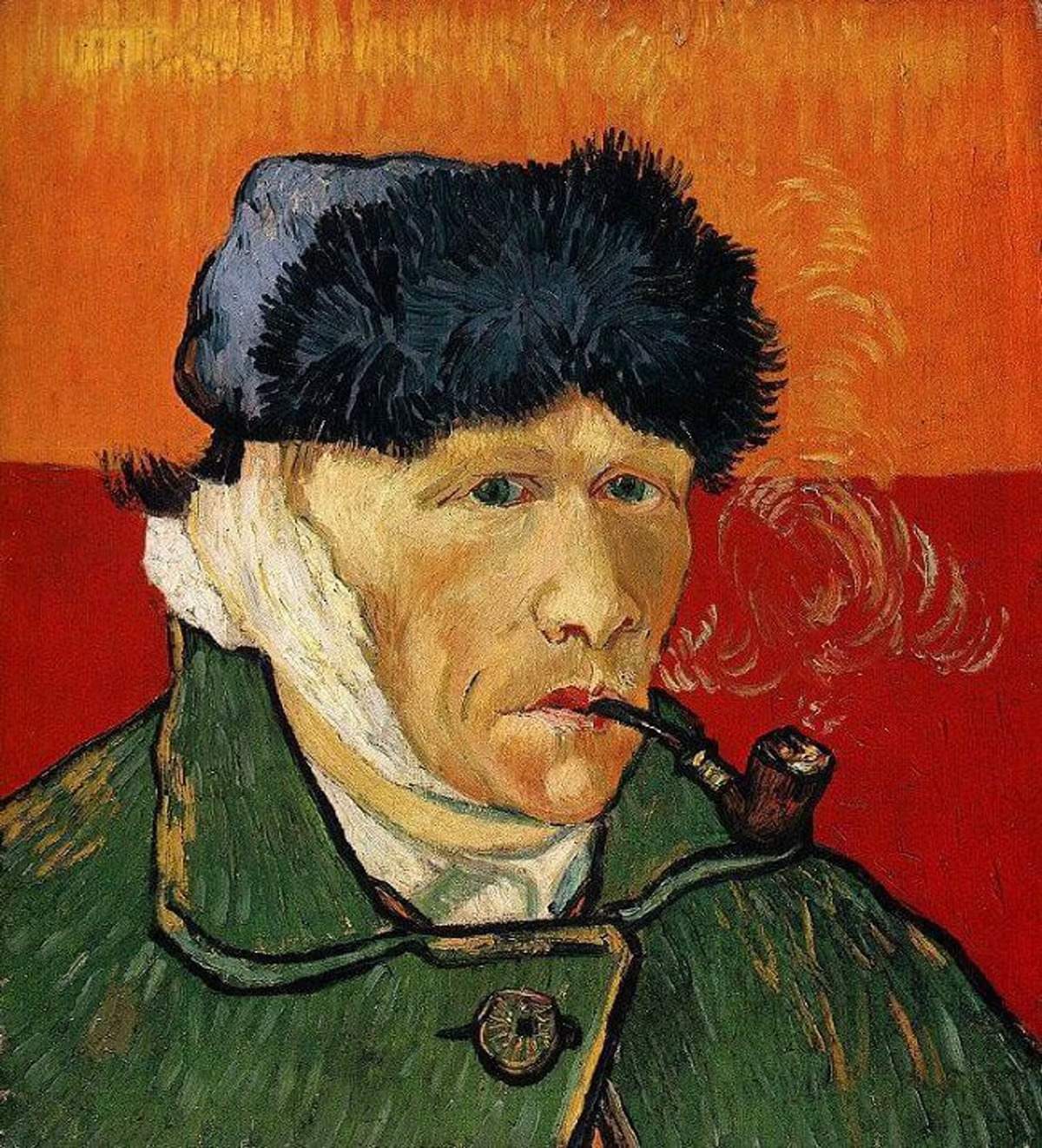
Vincent van Gogh is rarely remembered as a man of religion. However, Oscar Yuill finds that there is more than a touch of faith in the Dutch master’s life and work Sunflowers on fridge magnets, starry skies on tote bags, nighttime cafés on t-shirts: the man who sold just one painting during his lifetime ( The Red Vineyard ) is now a commercial phenomenon and arguably the most recognised and ubiquitous artist in the history of Western painting. I mean, of course, Vincent van Gogh. Biographically speaking, however, most people do not know much about him except that he cut off his ear and, shortly thereafter, shot himself. We feel little need to pry any further; it is enough that Gogh sates our appetite for the suffering artiste, an appetite that has been rumbling away since Goethe’s Sorrows of Young Werther and the Sturm und Drang of Beethoven’s late symphonies and string quartets. Indeed, if Vincent’s mind could be “heard”, especially during his year-long stay at the Saint-Paul de Mausole psychiatric hospital, it would sound, perhaps, like Beethoven’s Grosse Fugue , which was also slated by contemporary critics. But this Vincent of the popular imagination is a half-truth, and an unfair one. He was not driven by absinthe, but by faith. There are signs this is changing, but faith, especially Christian faith, has long been anathema to the mainstream artistic and cinematic industries. I suspect many galleries would sooner admit to asbestos in the ceiling than write a museum card that did not describe the West’s historical faith as though it were an Ecuadorian shrunken head. I have been to many van Gogh exhibitions. They usually consist of luscious reproductions, sometimes originals, of only the secular favourites: Sunflowers , Starry Night , Wheatfield with Crows , etc. One gallery in London promised a “retina-battering, virtual-reality post-Impressionist extravaganza”. None of them covered the central moral and aesthetic wellsprings of the artist’s heart. None of them, that is, featured Pietà (which can be found in “Room 2” of the Vatican Museum), The Raising of Lazarus , or Parable of the Sower . Vincent’s early letters read like sermons by the Church Fathers. “Hold on to what you have,” he wrote to his brother, the aptly named Theo. “I long so fervently for the goal you know of. But how can I attain it? … It takes so much hard work to become a Christian labourer and a preacher of the Gospel and a sower of the Word.” He spoke from experience. Long before he took up the brush, Gogh slept in barns, subsisting on bread, water and wine, and preached the Good News to coal miners in the Belgian Borinage. “I want to be bound to Christ with unbreakable bonds,” he wrote elsewhere, “to be sorrowful yet always rejoicing. To live in and for Christ, to be one of the poor in His Kingdom, steeped in the leaven, filled with his spirit, impelled by His love, reposing in the Father.” These are not the words of an agnostic; they are the words of a fanatic. But this excess de zèle soon brought him to the attention of the Evangelisation Council of the Dutch Reformed Church, which promptly expelled him from its hierarchy (such as it was). The whole affair left him deeply wounded. Nor was it the last time he would be ostracised and scapegoated. Gone sour on organised religion, his letters hereafter shift tonally from the supernatural to the natural. If the contemporary secular world finds it so easy to overlook his faith, it is because he himself chose to step back from it. Not, however, inwardly. His faith was too deep simply to vanish along with the religious subject matter of his youth. Rather, it found a gentler, subtler expression in even his most famous paintings. Consider Café Terrace at Night . I have myself been to this café, now rather a grotty tourist trap, in Arles. Gogh’s rendering appears to be little more than a post-Impressionist gloss on an otherwise perfectly naturalistic scene. But upon closer inspection, the painting is nearly medieval in its rich symbolism. Twelve people are seated around an enigmatic thirteenth figure (the waiter), and to the left, by the door, stands a shadowy figure all in black. It has been suggested that the waiter is Christ, the twelve His disciples, and the shadow Judas. The window behind the waiter even forms a cross. It is difficult to unsee this interpretation. Another example: I have always wondered whether Wheatfield with Crows , one of his last paintings, at once so dark and so hopeful, is not in fact Golgotha. The wheat is swept up in a strong wind as though something of incalculable magnitude has just occurred: “And behold, the curtain of the temple was torn in two, from top to bottom; and the earth shook, and the rocks were split” (Matt. 27:51). The three paths suggest a cross or the Trinity; and the way the middle path peters out into a distant point under the light of the moon (or cloud?) suggests an eschatological peace. Wishful thinking or no, it is reasonable to believe that the fiery missionary of Borinage was at work to the end. Faith informs a person in more ways than one, and certainly in more ways than the obvious. “Try,” says Gogh, “to grasp the essence of what the great artists, the serious masters, say in their masterpieces, and you will again find God in them. One man has written or said it in a book, another in a painting.” He could never have known that he would rank among those masters; he had no reason to suppose the future would resurrect him, much less celebrate him. But then, as he said: “The nature of every true son does indeed bear some resemblance to that of the son who was dead and came back to life.” Though deeply flawed, alcoholic, self-harming, capricious, there was, I am convinced, something of the saint in that red-headed Dutchman. He was like a child, indeed was frequently bullied by the children of whichever village he happened to be staying in, and thus closer to God. He saw things no one else saw, and “inscaped” them (to use Manley Hopkins’s terminology) in ways no one else could. Van Gogh will never be canonised. But despite being such a messy, pipe-smoking, absinthe-sodden wastrel, he can, in the manner of a saint, help us get a little closer to that mysterious beauty at the heart of human suffering.
May 11, 2026
The quiet rise of Generation X within the Church hierarchy
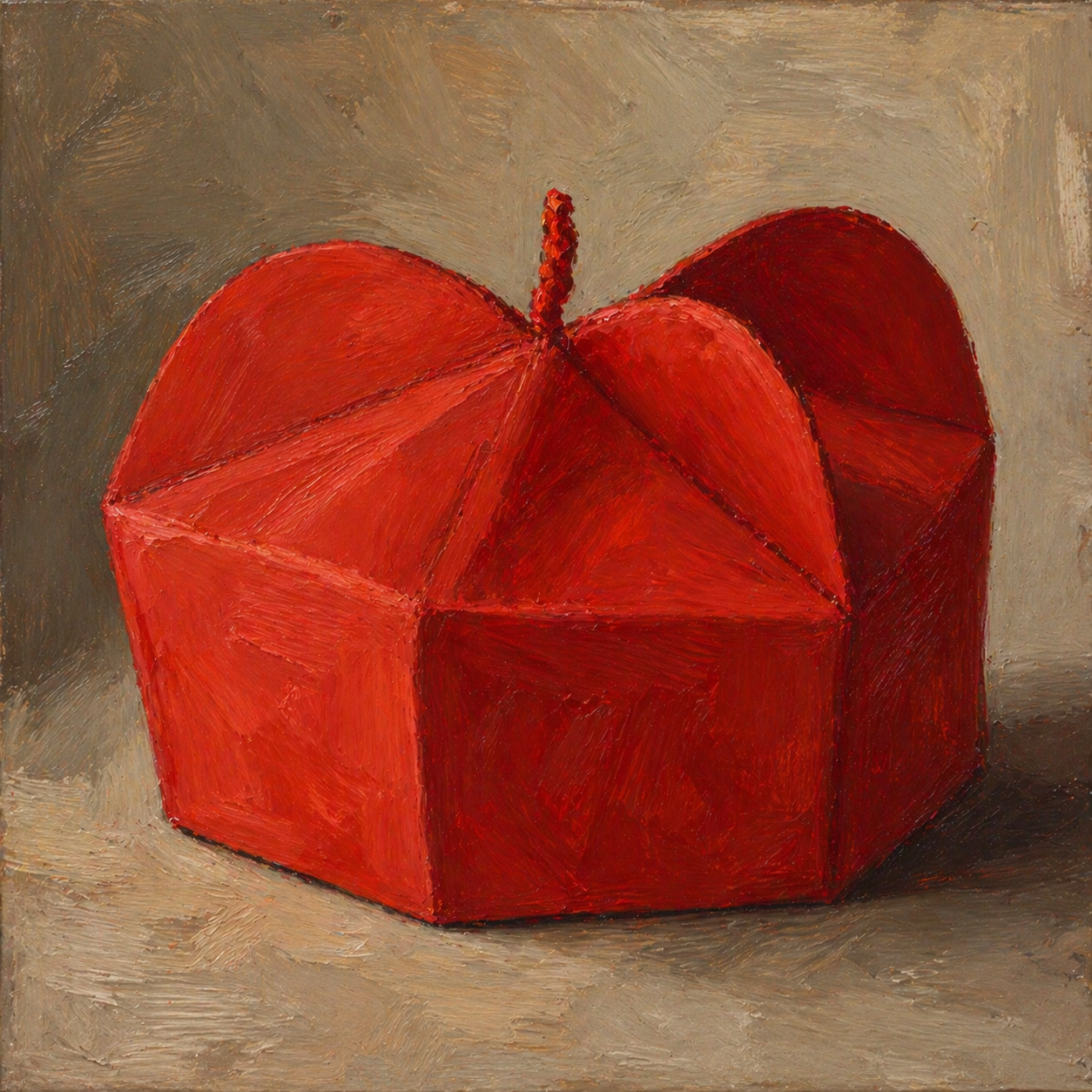
A younger group of cardinals, drawn from Generation X, is emerging within the College. These prelates are already stepping into positions of influence “Generation X”, often described as the forgotten generation between “Boomers” and “Millennials”, is generally considered to include those born between 1965 and 1980. In secular terms, they are characterised by relative wealth, having bought homes before the steepest price rises of the 2000s and 2010s, and by confidence with technology which stops short of the digital nativeness of millennials. Leonardo DiCaprio, Elon Musk and Justin Trudeau are some of the better-known inhabitants of the age bracket, with JD Vance just missing the boat and describing himself as a “geriatric millennial”. In the Church, they are the men who entered the post-Vatican II seminaries, marked by a steep decline in attendance. But their formation for the priesthood also came at the end of the liturgical experiments of the 1970s and 1980s, which erroneously attempted to capture the vision of Sacrosanctum Concilium . They were also the first generation to be raised almost entirely with the 1969 Mass of Paul VI and were, in some ways, the test run for the expected fruit which the Council might bear. In all likelihood, the next conclave, whenever that may be, will elect a cardinal from this generation of priests. Currently, just 17 members of the College of Cardinals were born after 1965. Amongst those, some are making a meteoric rise through the hierarchy and whom we can expect to see much more of in the coming years. For example, Cardinal George Koovakad, born on 11 August 1973 and sitting comfortably in the middle of Generation X, is probably the most senior cardinal from the Eastern Churches and the second youngest among the group after Cardinal Mykola Bychok. A priest of India’s Syro-Malabar Church, he was ordained in 2004 before entering the diplomatic service of the Holy See in 2006. Elevated to the cardinalate directly from the rank of priest, he was made an archbishop after the announcement of his elevation. He became known as the “travel agent” of the Francis era, arranging the complex itinerary of one of history’s most travelled popes. In 2025 he was appointed Prefect of the Dicastery for Interreligious Dialogue, becoming the first prelate from the Syro-Malabar Church to head a curial department. Another is Cardinal Francis Leo. With both the current pontiff and his predecessor’s name, his story is one of meteoric rise. In 2022 he was made Auxiliary Bishop of Montreal before being appointed Archbishop of Toronto less than a year later. Pope Francis made him a cardinal in the December 2024 consistory. Cardinal Leo is a renowned Mariologist and founder of the Canadian Mariological Society. He has also served as secretary general of the Canadian Conference of Catholic Bishops and has an impressive record in the Holy See’s diplomatic service. At the most recent conclave, the Portuguese-speaking bloc was significant. Portugal, a country with just 10 million inhabitants, had four voting-age cardinals, while Brazil had seven. Combined with two Portuguese-speaking Africans, the total was 13, just under 10 per cent of cardinal electors. Among them, Cardinal Américo Aguiar was the youngest. Tasked with organising the 2023 World Youth Day in Lisbon, which was widely seen as a huge success as well as financially profitable, it was announced that he would be made a cardinal before the event. As Auxiliary Bishop of Lisbon, Cardinal Aguiar’s appointment was unusual. The move was made even more so by the fact that, by the time he officially received his red hat in the September 2023 consistory, a new Patriarch of Lisbon had been appointed, Archbishop Rui Valério, who has to this day not been made a cardinal. Cardinal Aguiar’s effectively higher rank than his superior is made even stranger by the apparent ignoring of the long-established tradition of the Patriarch of Lisbon being made a cardinal. Cardinal François-Xavier Bustillo is a Generation X cardinal emblematic of what Pope Benedict XVI called “the new evangelisation”, the missionary effort to re-Christianise those parts of Europe that have been lost to secularism. Joining the Franciscans at the age of just 17, he was ordained a priest in 1994 and, that same year, founded the convent of Saint Bonaventure in Narbonne, with a mission to re-evangelise a town where 19th- and 20th-century anti-clericalism had been particularly strong. In 2021 he was appointed by Pope Francis as Bishop of Corsica and, in 2022, the late pontiff arranged for copies of Cardinal Bustillo’s book, Testimoni, non funzionari (Witnesses, Not Officials), to be handed out to priests attending the Chrism Mass in St Peter’s Basilica. A year later he was made a cardinal and became a member of the Dicastery for the Clergy. Cardinal Bustillo was recently tasked with helping with the formation of Spain’s priests, in a country which remains a centre of priestly formation, with more than a thousand men in training. “Generation X”, by the standards of Church hierarchy, has relative youth on its side, and these men, alongside their colleagues in the College of Cardinals of the same generation, represent the next wave of leadership. While the voice of a prince of the Church always deserves attention, these are the figures we can expect to hear more from. By listening to them closely, we may gain a clearer sense of the direction the Church will take in the coming years.
Apr. 30, 2026
Channel 4 drama Falling turns celibacy into a hollow spectacle
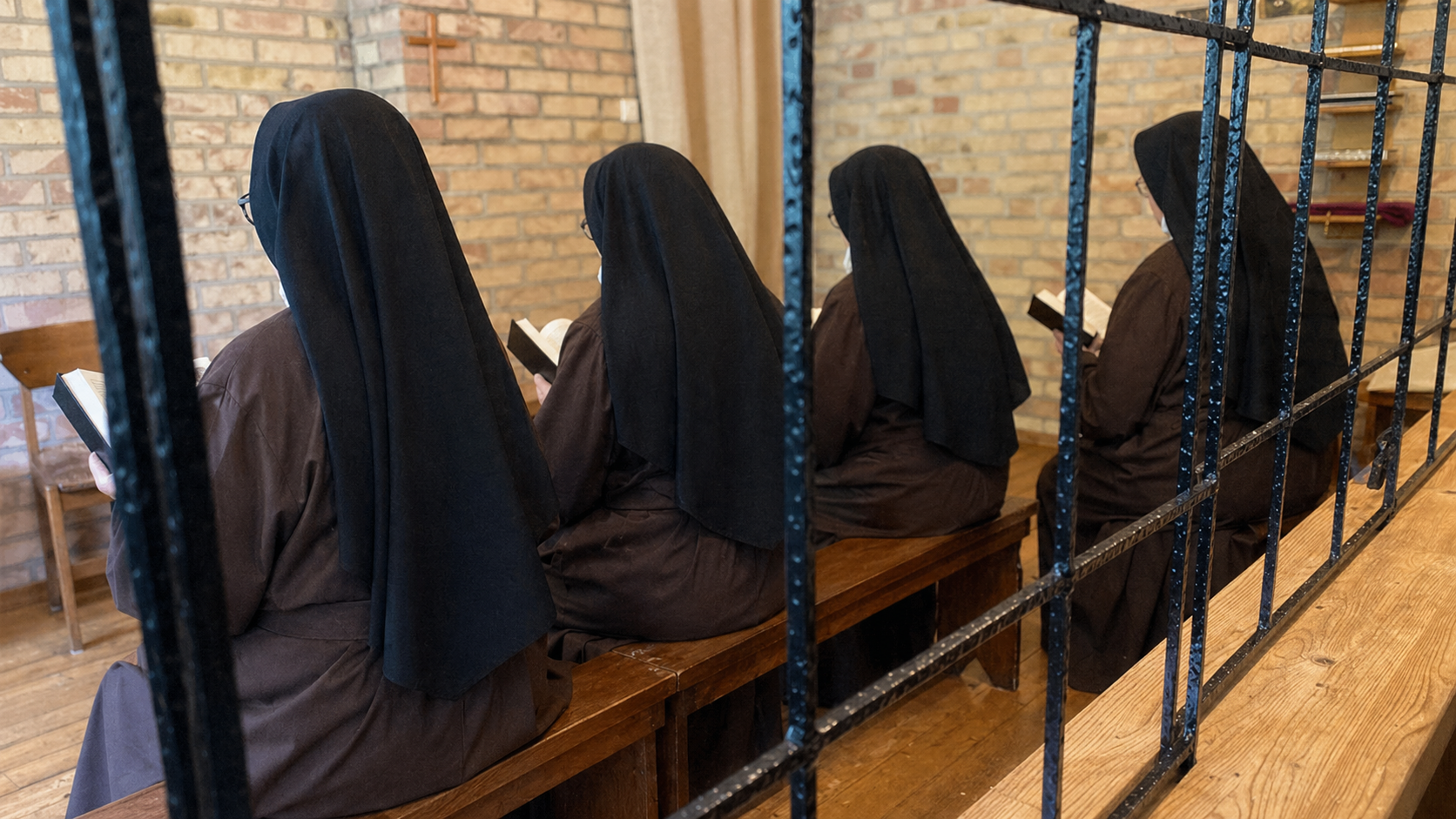
A new Channel 4 drama will depict a nun and a priest in a romantic relationship, placing Catholic vows at the centre of a storyline that treats celibacy as something to be tested and overcome A new Channel 4 drama centred on a romantic relationship between a nun and a Catholic priest has been announced. Falling , a six-part series written by Jack Thorne, will depict the story of a nun in religious life who develops feelings for a priest, whose response to her advances becomes a central tension of the narrative. The programme forms part of a wider slate of new productions commissioned by Channel 4, alongside Pierre , a separate drama by Roy Williams starring David Harewood. The broadcaster first confirmed the project in February 2025, with production beginning two months later. The series is being produced by The Forge Entertainment, a subsidiary of Banijay UK, whose previous credits include National Treasure and The Buccaneers . Casting details announced in April 2025 confirmed Keeley Hawes in the role of Anna, described as a “devoted nun”, and Paapa Essiedu as David, a Catholic priest. The supporting cast includes Rakie Ayola, Jason Watkins, Niamh Cusack, Adrian Scarborough, David Dawson, Susan Brown and Sandra Voe, alongside newcomers Holly Rhys and Shayde Sinclair. According to production material released by Channel 4, the series will follow two individuals “deeply committed to their work in the Church and in their community”, whose relationship develops in unexpected ways. “Neither is expected to fall in love. But when they do, both are forced to wrestle with what it means for them, their vows and their relationship with God,” the synopsis states, describing the programme as a “contemporary romantic drama”. The involvement of Thorne, a BAFTA award-winning writer whose previous work includes Adolescence and Help , has been highlighted by the broadcaster as a significant element of the project. Speaking at the time of the announcement, he said: “I never thought I’d write a love story, but I am very excited to be making one with the brilliant Peter Hoar.” Hawes, who will play the central role of Anna, said: “I’m thrilled to be taking on the role of Anna and so looking forward to working alongside the brilliant Paapa Essiedu to bring Jack Thorne’s beautiful scripts to life.” Essiedu added: “Falling is a story that has Jack Thorne’s singular talent of mining the sublime out of the ordinary running all the way through.” The series is directed by Peter Hoar, whose recent work includes It’s A Sin and episodes of The Last of Us . Executive producers include George Faber and George Ormond, with Joe Donaldson serving as producer. The drama has been commissioned by Ollie Madden, Director of Film4 and Channel 4 Drama, and Gwawr Lloyd. Lloyd said: “The combination of Keeley Hawes and Paapa Essiedu, alongside Jack Thorne’s incredible scripts and Peter Hoar’s direction, means this will be the most extraordinary show. We are so excited to bring this unique and compelling love story to Channel 4.” While Falling is presented as a fictional drama, its premise touches directly on Catholic teaching concerning celibacy and religious vows. Both priests and women in consecrated life in the Latin Church undertake commitments that preclude marriage, a discipline that has long been regarded as integral to their vocation. The announcement of Falling is a deliberate attempt to treat the Roman Catholic Church and the Latin tradition of sacred celibacy as material for dramatic transgression. The premise is framed as a “contemporary romantic drama” in which vows are placed under emotional strain. This is a sign of well-established, society-wide anti-Catholic sentiment and, in particular, a challenge to consecrated life, not as a sign of spiritual transcendence, but as a psychological tendency waiting to be resolved through desire and lust. This becomes more explicit as the nun in Falling is not presented first as a bride of Christ, but as a woman defined by an inner conflict that must culminate in romantic expression. The priest, likewise, is drawn into a narrative in which celibacy appears as an obstacle rather than a vocation. This is a product of a wider cultural movement in which the sacred is frequently recast as repression and denial. Since the upheavals of the Enlightenment, Catholic institutions have often been treated in British culture as relics of a restrictive order. In earlier centuries, anti-Catholicism was overt and political; in the modern era, it has become more aesthetic and psychological, making it more accessible to the average person. The confessional, the cloister and the priesthood are no longer attacked directly, but reinterpreted as symbols of conflict against the “secular” West. The shift is subtle but significant, as it allows Western secular culture to maintain a posture of tolerance while continuing to single out Catholicism as uniquely available for ridicule. Moreover, such narratives are rarely extended to other religious traditions. There is an instinctive hesitation to depict a rabbi or an imam in similar terms. It is an unspoken hierarchy of sensitivities, in which Catholicism is perceived as both safe and familiar enough to be handled without restraint. It is often Catholics who are singled out for ridicule. Furthermore, this recalls how the secular celebration of Halloween in the West has increasingly included costumes that trade on religious imagery in ways many Catholics find irreverent, particularly the recurring trope of the sexualised nun. What might once have been regarded as harmless fancy dress now reflects a cultural tendency to strip sacred symbols of their meaning and repurpose them for amusement or provocation. This is a sign, in the modern West, of how easily the sacred can be trivialised when its underlying meaning is no longer grasped. This was perhaps most apparent in the recent controversy surrounding the radio station Studio Brussel. Earlier this year, presenters Eva De Roo and Dries Lenaerts apologised for a sketch in which Catholic statues, including those of Christ and the Virgin Mary, were smashed as part of a comedic segment. Interviewed by Colm Flynn of EWTN News, the presenters explained their actions, saying: “I think it might offend people, but I think in Belgium not really, we are not a very religious country… I would have been more careful in another country, but in Belgium it is not a big issue.” Flynn then asked the presenters whether they would smash an image of Muhammad, which prompted a much more sober reaction. “That is a very dangerous question,” one said, while another added: “No, no, that would be inappropriate.” They also unanimously agreed they would not do the same to a Jewish symbol. The implication was clear: Catholic symbols were perceived as uniquely permissible targets within this hierarchy of “sensitivities”. Falling , it seems, is another example of modern writers struggling to imagine religious commitment except as a prelude to its own violation. Religious life cannot be appreciated for its intrinsic beauty, but must rather be desecrated to earn viewers’ apparent interest. The irony is that, whilst a quickly fading generation of writers attempts to entice its audience through sacrilege, there is a growing interest in traditional expressions of religious life, with a generation exhausted by media cycles and instant communication finding refuge in contemplation and the rhythm of prayer. Indeed, last summer was branded online as “Convent Summer”, with an explosion of interest in going on retreat. Similarly, there has been a worldwide surge in people going on pilgrimage, with the number of people walking the Camino de Santiago de Compostela increasing almost tenfold since 2000. This thirst for authentic religious life makes the richness of vocation being reduced to a single preoccupation of the writer even sadder. However, as a results-driven economy makes apparent its shallowness, and viewers’ preference for the Church’s truths becomes known, we might expect less Falling -style degradation and more of what has shaped Christian culture for hundreds of years: the adventure of religious life.
Apr. 28, 2026
Vatican accepts monks’ appeal over Valle de Cuelgamuros plans
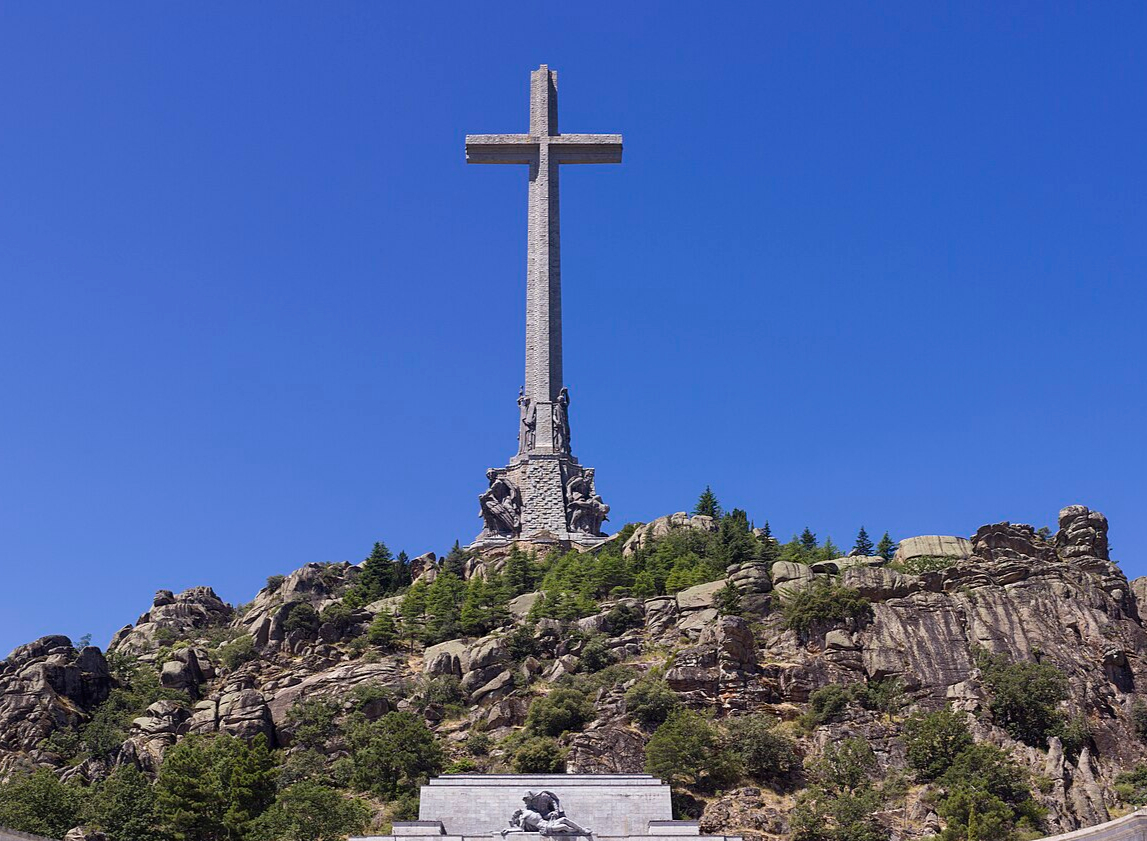
The Vatican has accepted an appeal from Benedictine monks at Valle de Cuelgamuros against government plans, with ministers claiming an agreement with Cardinal José Cobo and the Vatican, while bishops deny any sign-off The Vatican has formally accepted an appeal lodged by the Benedictine monks of the Valle de Cuelgamuros against plans to “re-signify” the historic and religious monument. Pedro Sánchez administration’s initiative, officially titled “La base y la cruz” (The Base and the Cross), emerged as the winner of an international architectural competition. The winning proposal envisions transforming parts of the complex, including the entrance atrium, the side chapels dedicated to Marian devotions along the nave, and the Chapel of the Blessed Sacrament near the main altar. The formal presentation of the project is scheduled for June 2026, deliberately timed to coincide with the anticipated apostolic visit of Pope Leo XIV to Spain. However, Minister Félix Bolaños has claimed that an accord was reached with Cardinal José Cobo of Madrid and the Vatican, declaring: “we reached the agreement with Cardinal Cobo and with the Vatican.” The Spanish Episcopal Conference has, however, pushed back strongly. Monsignor Francisco César García Magán, secretary general and auxiliary bishop of Toledo, stated after the bishops’ 129th plenary assembly that “the Vatican has not been a signatory, there has been no signatory from the Vatican”, and he repeated on several occasions that “no representative of the Vatican has signed”. This is similar to the Archdiocese of Madrid’s statement from March 2025, which clarified that Cardinal Cobo had acted only as a designated interlocutor within an ecclesial commission, without a formal mandate from Rome over the pontifical basilica. Cardinal Cobo has consistently maintained that neither he nor the Archdiocese of Madrid holds canonical authority over the Basilica of the Holy Cross or the Benedictine community. He has insisted that ultimate responsibility rests solely with the Holy See. The Benedictine monks argue that the alleged agreement lacks proper ecclesiastical authority because it was advanced by Cardinal Cobo without the direct involvement of the monastery’s prior or the Holy See, which retains direct jurisdiction over this pontifical basilica, elevated by Pope John XXIII in 1960. The monks have raised particular objections to changes planned for the entrance atrium, a space integral to their liturgical life that has hosted major ceremonies, including priestly ordinations. One such ordination took place there in October of last year, with Cardinal Cobo himself in attendance. Church officials emphasise that canonical norms protecting consecrated spaces remain fully in force, prohibiting any uses unrelated to worship until authorised works can legitimately begin. Further complications surround the status of the Benedictine community. Former prior Santiago Cantera was removed from his post last year amid reported government pressure and internal ecclesiastical decisions. Parallel legal challenges have also emerged. Appeals have been lodged citing procedural deficiencies, including the absence of required licences from the San Lorenzo de El Escorial town hall and the Community of Madrid. Monsignor Luis Argüello, president of the Spanish Episcopal Conference, has called for renewed dialogue. He urged both the government and the Benedictine community to reach “a reasonable and satisfactory agreement for both parties.” His intervention notably made no reference to any prior agreement involving Cardinal Cobo. As of April, the Vatican’s acceptance of the monks’ appeal has moved the entire dispute into a structured canonical process that runs alongside ongoing proceedings in the Spanish courts. The government continues to insist it will begin work on the surroundings and parts of the basilica in June. The Valle de Cuelgamuros, with its massive underground Basilica of the Holy Cross and the world’s tallest Christian cross, remains one of Spain’s most symbolically charged locations. It combines profound religious significance as a consecrated pontifical basilica with its complex historical and political role as a burial site for tens of thousands from both sides of the Spanish Civil War. Pedro Sánchez has taken an interest in the memorial site since the beginning of his time in office, commenting in August 2018, just months after his election, that it should be a “resting place” for those buried there and “a civil cemetery.” In 2022, under the Democratic Memory Law (Ley de Memoria Democrática), Sánchez’s government changed the name from “Valle de los Caídos” (Valley of the Fallen) to “Valle de Cuelgamuros” (the geographical area in which it is located). However, Sánchez’s minority government is coming under increasing pressure from a growing conservative bloc. Among those voters, typically characterised by Vox and People’s Party supporters, there is strong opposition to government intervention at the site and significant criticism of what is seen as his attempts to politicise a religious and historical monument.
Apr. 27, 2026