The Diocese of St Cloud in Minnesota is preparing to implement what has been described as one of the most sweeping restructurings of parishes in the region, with plans to reduce its 131 parishes to 48 amid a shortage of clergy and a long-term decline in Catholic practice.
The proposals, reported by the Minnesota Star Tribune on 30 April, will affect the vast majority of the diocese’s estimated 110,000 faithful and will mark a decisive shift in how Catholic life is organised across central Minnesota. Even parishes that remain open are expected to lose regular Sunday Mass provision under the plans.
Brenda Kresky, the diocesan director of pastoral planning, told the Minnesota Star Tribune that the changes were unavoidable given present circumstances. “Right now, all of our 131 parishes have Mass every weekend,” she said. “We’re reducing that by [about] a third and saying, even if you remain open, you won’t have Mass at the weekend.”
The scale of the restructuring reflects an imbalance between the number of parishes and the clergy available to serve them. According to the 2025 edition of The Official Catholic Directory, the diocese has 49 active diocesan priests, alongside a wider total of 87 diocesan clergy and 73 religious priests. The ratio has left many priests responsible for multiple communities, often travelling between several churches each weekend.
Kresky acknowledged the strain this places on clergy and the diminishing congregations they serve. “Many of our churches are four miles apart, five miles apart,” she said, describing a landscape shaped by immigrant settlement patterns in which churches were built in close proximity to sustain local communities. In practice, this has meant priests celebrating several sparsely attended Masses across a wide area rather than serving a single, larger congregation.
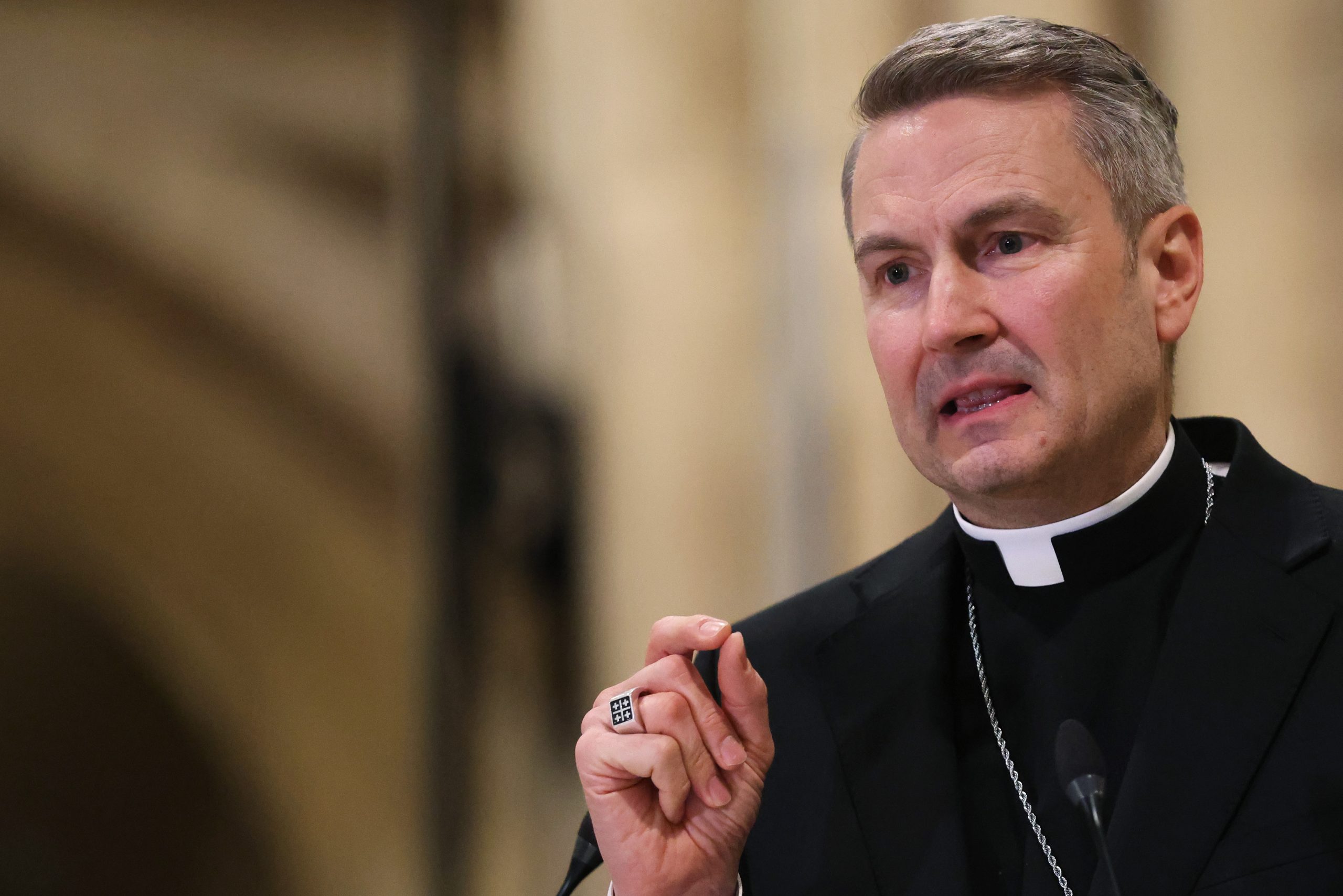
The restructuring process is being led by Bishop Patrick Neary, who is expected to begin issuing formal decrees in the coming weeks. The proposals themselves have been developed over the past year through consultation with regional committees comprising clergy and lay representatives, though this has not prevented opposition at parish level.
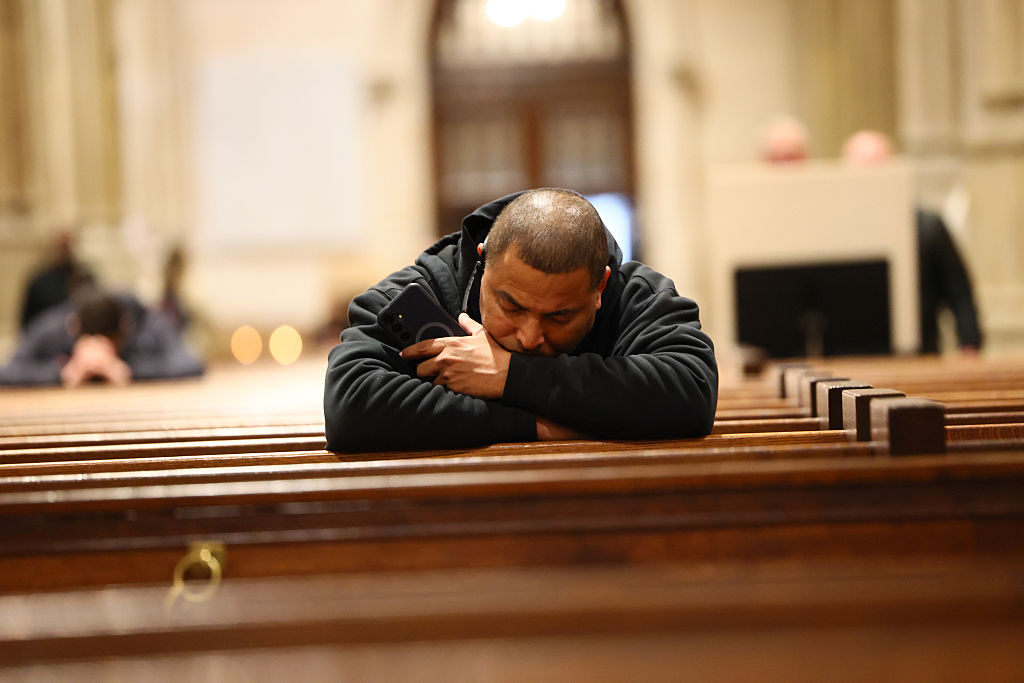
The prospect of closures represents not simply administrative change but the loss of longstanding communal identities. John Wicker, a parish trustee at Holy Cross Church near Pearl Lake, told the newspaper that the impact would be deeply felt. “It’s going to split up the community,” he said. “What’s going to hurt the most is losing those connections over time.”
Similar concerns have been voiced elsewhere in the diocese. Carly Serbus, a member of St Anne’s in Kimball, described the proposals in stark terms. “This is just devastating for us,” she said. “It’s ripping the heart out of our community.”
The emotional response reflects the historic role played by Catholic parishes in the region. Many were established more than a century ago by German and Polish immigrants, serving not only as places of worship but as centres of social and cultural life. In rural areas especially, the parish church has often functioned as the focal point of the community across generations.
Yet the demographic realities facing the Church in Minnesota mirror broader trends across the United States. Data from the Pew Research Center indicates that the proportion of adults in Minnesota identifying as Catholic has fallen from 28 per cent in 2007 to 18 per cent in 2024, while the number of those claiming no religious affiliation has more than doubled over the same period.
At the same time, the number of men entering the priesthood across the United States has not kept pace with pastoral needs. The result is a growing structural strain that dioceses across the region have already begun to address. The Archdiocese of St Paul and Minneapolis reduced its number of parishes from 213 to 192 beginning in 2010, while the dioceses of Duluth and New Ulm have also implemented mergers and closures over the past decade.
St Cloud has until now delayed similar measures. Kresky suggested that earlier inaction was influenced by exceptional circumstances, including episcopal illness and the demands placed on diocesan leadership during the clerical abuse crisis and subsequent bankruptcy proceedings. “Everybody’s done something – and we didn’t,” she said. “What we are looking at now is how do we best serve our people right now with the resources that we have?”
The practical consequences of the restructuring will extend beyond the immediate question of parish closures. While some church buildings may remain in use for occasional services or other purposes, decisions regarding their long-term future have yet to be finalised. This uncertainty has added to the anxiety among parishioners concerned about the fate of historic buildings, religious artefacts and local traditions.
There remains, however, a formal process through which parishioners may challenge closure decisions. Should a parish be suppressed, the faithful have the right to petition the diocesan bishop and, ultimately, to appeal to the Holy See. Though relatively uncommon, such appeals have on occasion succeeded, as in the case of a church in the Diocese of Duluth, which was reopened in 2021 after a period of closure.