Ghana has welcomed Pope Leo XIV’s apology for the Catholic Church’s historical role in slavery.
The apology was made in the Pope’s first encyclical, Magnifica Humanitas, published on 25 May, in which Leo addressed artificial intelligence, modern exploitation and the legacy of slavery.
In one of the most closely watched passages of the document, the Pope admitted that Church authorities had, at times, “regulated and legitimised forms of subjugation and, in certain cases, the enslavement of ‘infidels’”.
He also acknowledged that “in antiquity and the Middle Ages many individuals and even ecclesiastical institutions had slaves”.
“This constitutes a wound in Christian memory,” the Pope wrote. “It is impossible not to feel deep sorrow when contemplating the immense suffering and humiliation endured by so many.”
“For this, in the name of the Church, I sincerely ask for pardon.”
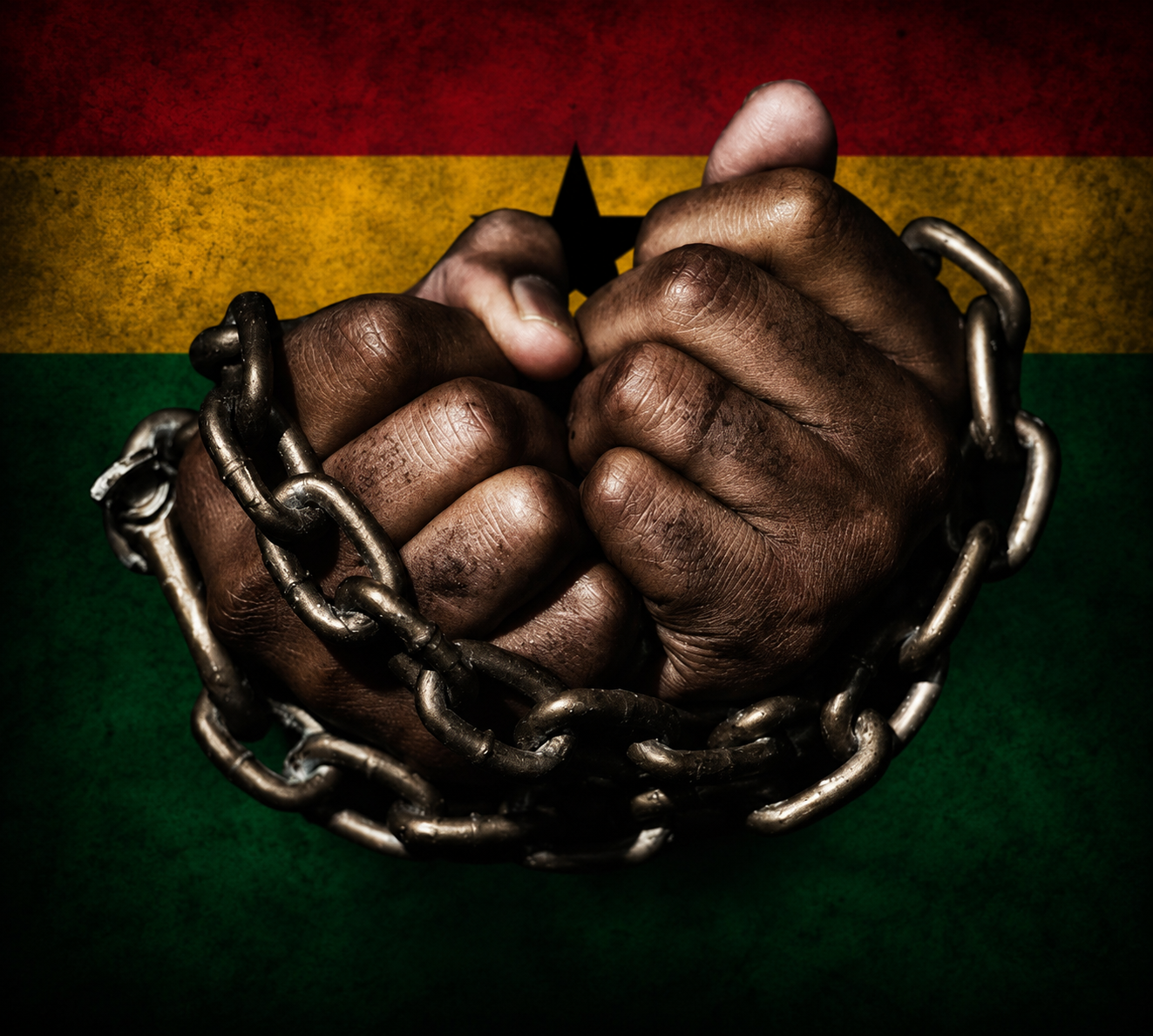
The Ghanaian government responded by describing the apology as “an act of moral courage” and an important contribution to the pursuit of “truth, human dignity and justice”.
In a statement issued by its Ministry of Foreign Affairs on Tuesday, the government said the Pope’s remarks represented “an important contribution to the ongoing global pursuit of historical truth, human dignity and justice”.
“The statement represents an act of moral courage on the part of the Pope,” the ministry said.
Ghana added that the apology “reinforces the growing global understanding that confronting historical injustices demands truth-telling and moral responsibility as essential foundations for justice and reconciliation”.
The intervention is the clearest papal apology for the Catholic Church’s involvement in slavery.
Previous pontiffs, including Pope John Paul II and Pope Francis, condemned slavery and apologised for the actions of Christians involved in the slave trade. Pope Leo, however, went further by directly acknowledging the role of Church institutions and past papal actions in legitimising forms of enslavement.
Millions of Africans passed through forts along the Gold Coast before being transported to the Americas between the sixteenth and nineteenth centuries. Cape Coast Castle and Elmina Castle remain among the most prominent reminders of the trade, where captives were held in dungeons before being loaded on to slave ships bound for the Caribbean and the Americas.
Historians estimate that between 12 million and 15 million Africans were transported across the Atlantic during the slave trade, with millions dying during the journey or in captivity.
Ghana has become one of the leading African voices calling for reparations and formal international recognition of slavery as a crime against humanity.
Earlier this year, the United Nations adopted a Ghana-backed declaration recognising the enslavement of Africans as “the gravest crime against humanity”. The resolution was backed by John Mahama and the African Union and called for further international dialogue on reparative justice and the effects of slavery and colonialism.
The Holy See had previously expressed reservations about aspects of the declaration.
Archbishop Gabriele Caccia, the Vatican’s former representative to the United Nations, warned against what he described as “a partial narrative, which, regrettably, does not serve the cause of truth”.
He pointed to earlier papal condemnations of slavery, including those of Pope Eugene IV in 1435 regarding the enslavement of indigenous peoples in the Canary Islands.
Pope Leo’s encyclical addressed that historical tension directly.
“In the development of her doctrine, the Church has gradually come to a deeper awareness of the gravity of these issues,” the Pope wrote.
“It was only in the nineteenth century that a formal, absolute and universal condemnation of slavery was clearly articulated.”
The Pope said the Church’s delayed response to slavery demonstrated the need for continual moral reflection when confronting modern forms of exploitation.
Pope Leo also warned against what he described as “new forms of slavery” linked to technological and economic systems that reduce human beings to “data, productivity, or technological utility”.
Presenting the document at the Vatican, the Pope said: “We must seek to build a civilisation of love rather than a culture of power.”
The encyclical was released only weeks after Leo completed his first papal visit to Africa, during which he criticised the exploitation of the continent’s natural resources and warned against “new forms of colonial dependence”.
The Vatican has previously been under pressure from historians and campaigners to formally repudiate fifteenth-century papal bulls, including Dum Diversas and Romanus Pontifex, which granted Christian rulers authority to conquer and subjugate non-Christian peoples.
In 2023, the Vatican formally rejected the so-called “Doctrine of Discovery”, which had historically been used to justify colonial expansion and dispossession.
Leo’s encyclical, however, marks the first time a pope has explicitly acknowledged the role played by Church institutions themselves in legitimising slavery and directly asked forgiveness for it.